



 Arturo Marroquin


For years, quantum computing has been at the center of conversations about everything from data analytics and cryptography to drug discovery, genomics, and—more recently—cybersecurity.
It's easy to see why.
The promise is extraordinary:
-
Solving problems in minutes that would take today's computers years—or couldn't be solved at all.
-
Optimizing complex systems that have no practical solution today.
-
Pushing beyond computational limits we've long assumed were fixed.
It's the kind of breakthrough that naturally captures everyone's attention.
But if there's one lesson every major technology wave has taught us, it's this: potential and readiness are not the same thing.
We've Seen This Story Before
Quantum computing isn't simply the next generation of computing. It's an entirely different computing model.
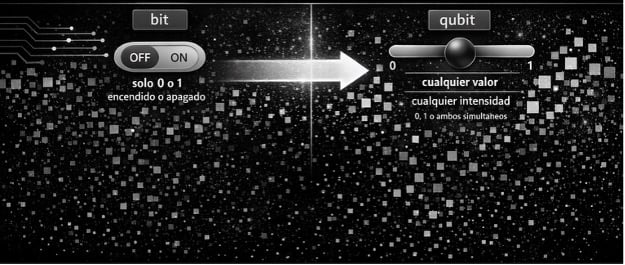
Traditional computers process information using bits—zeros and ones. Quantum computers use qubits, which can exist in multiple states at the same time.
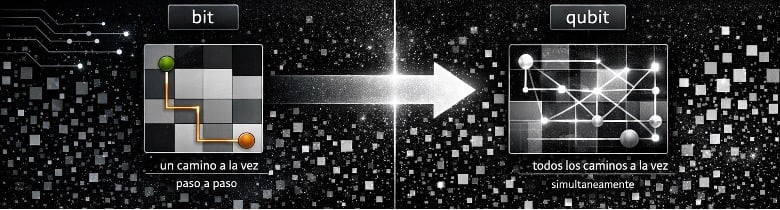
Imagine trying to solve a maze. A conventional computer explores one path after another until it finds the answer.
A quantum computer can evaluate many possible paths simultaneously.
That's an enormous leap in capability—but it also changes the rules completely.
In practical terms, it's the difference between solving a maze step by step using bits and exploring multiple routes at once using qubits.
That sounds incredibly powerful—because it is. But it also changes the rules of the game entirely.
The Catch: It Works... Under Very Specific Conditions
This is where the conversation becomes more grounded.
Today's quantum computers are remarkably fragile. They require highly specialized infrastructure, temperatures close to absolute zero, and investments that put them out of reach for most organizations—and even many research institutions.
Progress is real. Breakthroughs are happening. Practical applications are emerging.
But we're still far from enterprise-scale adoption.
The technology works. It just doesn't scale yet.
And in technology, that's a critical distinction.
A Pattern We've Seen Before
We've lived through this before.
Cloud computing followed a similar path. So did artificial intelligence. Quantum computing is beginning to follow the same trajectory.
The mistake isn't believing in the technology.
It's confusing long-term potential with short-term business readiness.
There's nothing wrong with experimenting. In fact, experimentation is essential. It's how innovation moves forward.
The problem begins when organizations start making business commitments around technologies that are still evolving—and not yet mature enough to deliver at scale.
Where Quantum Computing Is Already Creating Value
Quantum computing isn't just hype.
It's already showing meaningful promise in areas such as:
-
Scientific research
-
Advanced materials development
-
Human genome sequencing
-
Cryptography and cybersecurity
Cybersecurity deserves particular attention.
Quantum computing has the potential to undermine many of today's encryption standards. Organizations that begin strengthening their security posture now—including preparing for post-quantum cryptography—will be in a much stronger position as the technology matures.
Preparing for that future isn't optional.
It's strategic.
Even so, these remain highly specialized applications that are still far removed from the day-to-day operations of most businesses.
We're not improving existing processes.
We're expanding the boundaries of what's computationally possible.
The Real Bottleneck Isn't the Technology
Even if affordable, fully capable quantum computers became available tomorrow, most organizations still wouldn't be ready.
Not because of the hardware.
Because of everything around it.
There isn't enough specialized talent.
Operating models are still evolving.
Few organizations know how to measure the business value of quantum investments.
Governance, security, and regulatory frameworks are still taking shape.
As with every major technology shift, the biggest challenge isn't the technology itself.
It's organizational readiness.
That's why organizations should be investing today in AI, data, cybersecurity, and digital capabilities. Companies that strengthen those foundations now will be far better positioned to take advantage of quantum computing when it becomes commercially viable.
So, What Should Organizations Do Today?
Don't ignore quantum computing.
But don't chase the hype, either. Instead:
-
Build a strong understanding of the technology. Develop genuine conceptual knowledge—not just familiarity with the marketing narrative.
-
Stay informed as the field evolves. Progress in quantum computing is accelerating rapidly, and staying informed requires deliberate effort.
-
Experiment selectively. Explore internal use cases in areas such as optimization, simulation, or cybersecurity without prematurely committing to enterprise-scale outcomes.
-
Invest in capabilities that deliver value today. Intelligent automation, modern data architectures, AI governance, and strong cybersecurity practices are the foundation upon which future quantum adoption will be built.
Those investments will pay dividends whether quantum computing arrives in five years or fifteen.
The Question That Really Matters
Quantum computing will likely transform entire industries.
But not tomorrow. And certainly not overnight.
The question isn't whether it's coming. It already is.
TThe real question is whether your organization will be ready when it does.
Will you have the talent, governance, infrastructure, and digital foundation to capitalize on it?
Or will you repeat a familiar pattern—waiting until the technology becomes mainstream before realizing the groundwork should have started years earlier?
The organizations that lead aren't always the first to adopt new technology.
They're the ones that prepared before everyone else recognized the opportunity.
The future of quantum computing may still be unfolding.
The time to prepare for it is not.
Want to understand how to prepare your organization for the next wave of technological disruption? Let's start the conversation.