Agile UX in companies: perfecting the way forward

 Ángeles Alonso Navarro


(Original publication in Spanish)
Although the year 2020 has just begun, I’d like to take a brief look at 2019 to share some of the progress that will continue to be made regarding the integration of user experience (UX) in agile development.
Many UX professionals have been working in a progressive way for some time, but only now has it begun to sink in and gain headway across the board. It wasn’t an easy task, but we have gained experience and confidence through the mistakes we made. It also helps us that today more than ever, the most prominent companies in innovation and technology have radically changed the way digital projects are built. These projects are no longer somewhat closed and with a strict beginning and end, rather they now have to experiment, test and learn as quickly as possible and bring that knowledge into action.
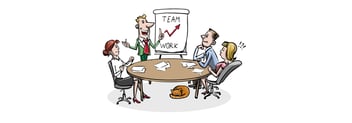
Our discipline follows companies on that path, guiding them and nurturing a balance between users/customers and technology/business objectives; and of course, all engaging within a multidisciplinary team.
Creating a good user experience will always be the result of many people paying attention to the quality of the final product or service.
So, how do we do it?
There are many different forms, concepts, approaches and alternatives (Lean, Agile, Scrum or Kanban), but in the end, the important thing is to adapt to the company and team and look in the large playbook of methods and tools that best suits each stage of our work process.
First of all, (and this will greatly help those who are just getting started) the first time a company integrates a team or person from UX into their development processes, we must evangelize them about our work, methodologies and techniques. We must help them understand that it’s a discipline that involves thinking, researching, testing and optimizing—not just designing. This is done together with other professionals who have different points of view and languages (commercial, marketing, customers, design and development), and we must seek a balance between all. Our role in agile has to be more of a “facilitator,” inviting the rest of the team in our research and design process to enhance the exchange of ideas.
Landing
The landing of a project focuses primarily on two items:
- Establishing a UX work strategy in the development of digital products or services
- Integrating this work into an agile methodology
UX Sprint
The goal of the UX sprint is to get the development team a design prototype of any feature or functionality that will be integrated into the application, already tested with the user and business.
To do this, we listen for two or three weeks to the vision of the business and the project’s stakeholders, participating when asked. Then we carry out surveys, interviews or tests with the target users to detect needs or validate hypotheses. Once this process is finished, we turn it into concepts that will generate experiences. Through the interaction design, we propose the different usage scenarios and translate it into interactive prototypes. Then we validate the proposals with the different project managers and users to make necessary adjustments.
At the end of this effort, we make the user stories that will nourish the backlog. To map stories (user story mapping) we usually apply techniques like Jeff Patton’s. This technique combines the concept of user-centered design and decomposition into user stories and allows us to work with one of the biggest problems that appears in software construction: the development of shared documentation doesn’t generate shared understanding.
The user stories map tries to mitigate the risk of this scenario through visual management and conversation. This exercise, of course, makes sense if it is done together with other team members (other stakeholders, design and development). This form of communication helps generate feedback through continuous conversation between everyone.
From user story mapping emerges tasks that will be planned for the next sprints, in which UX designers and other members of the development team can implement them.
. From now on we will work on iterations to constantly test and validate functions.
Team Sprint
This is when a member of the UX team works alongside development, validating the front of the functionality or feature already planned and in the sprint.
One day a week (usually a Monday), development teams begin their sprint. The day begins by planning the tasks that will come during a typical time period of 2 weeks. UX must integrate into this planning to show prototypes of the coming stories related to the interface, give explanations, and resolve doubts that developers may have. During this time, the development team will work on them.
In Scrum, projects are executed in short and fixed temporary blocks. Each iteration has to provide a complete result, such as a potentially deliverable product increase. This is fantastic because it will allow us as UX to be able to iterate, measure and learn quickly at the end of each sprint.
In these final phases, a demo is made where the entire team (business, marketing, customers, UX and development) gets to see the completed tasks. Opportune changes are proposed (and if everything has been planned correctly, there are few changes) and then production gets the green light.
Learning and continuous optimization
From start to production, the changes will be measured and analyzed to begin a continuous optimization process where metrics inform us about the impact of an implemented feature or function.
Retrospective
We always end up doing a retrospective where we comment on how the team sprint has developed, which helps us improve for the next one 😉.
. We have months of work and continuous improvement ahead, as agile is not just about applying processes and tools to use, but also about being flexible and being tolerant to change.