
 Softtek


Innovation is one of the hot topics in business management. For decades, product innovation and especially technology-based innovation has been the focus of academics and practitioners. However, in recent years the major authorities of the sector have agreed with the business current that places the business model as the key to the success of innovation.
Academics such as Clayton Christensen and Henry Chesbrough, or consultants such as Alexander Osterwalder and Steve Blank have emphasized that without a good business model there is no significant commercial success in the medium and long term.
Business success stories such as Apple, Zara, IKEA and Walmart, or not as well known as CEMEX or General Electric Aviation, are examples of well-designed business models. However, it should be noted that in all these cases, success is not a single idea of product or service, nor technological innovation; the key to success is a well-designed innovative business model.
The innovative business model
A business model deals mainly with the integration of a new look at the market, identifying the problems of current customers and the situation of new target customers, and this requires an innovative value proposition that solves these problems and innovative processes capable of materializing the value proposition. Without forgetting obviously, the financial side, the revenue model, the cost structure and finally the profit model must be adjusted.
However, in order to design a new business model, it is not enough to define the company’s own characteristics, but it is important to design a complete ecosystem or at least adapt to a new one, taking into account the relationships with the main business actors in the environment: customers, suppliers and competitors.
With the ecosystem map in mind, the company needs to ask itself if it has any valuable knowledge assets for the ecosystem actors. For example, some of the companies mentioned above such as IKEA (the customer is in charge of last mile transportation and furniture assembly), CEMEX (CEMEX is responsible for a 24-hour refueling process), GE Aviation (GE integrates engine maintenance and hiring flight hours instead of selling engines) have built their business models around a reconfiguration of the ecosystem.
However, the business models must address an environment characterised by:
- Technological complexity.
- An extremely dynamic change.
- Global competition.
In this context, the key to success is the ability to evolve and adapt quickly. This means that no company is able to keep pace on its own and needs complementary capabilities that evolve in a synchronized fashion. To meet this challenge, companies need to have an Open Innovation approach along with a Me to We mindset change.
An Open Innovation bastard
This type of approach means that companies share their knowledge with potential competitors with the aim of producing a change in mentality throughout the sector.
This change takes place from a “Me” point of view to a “We” mentality, which means thinking first about the needs of the ecosystem and then about the needs of the company.
Because of this new Me to We mentality, a new figure is emerging in the economy and organization of the business ecosystem, the organizer/researcher. This is a person charged with creating a network of peers in which participants interact and share value creation. Those companies that have this category within their staff are positioning themselves ahead of their competitors in the race to achieve a successful innovative model.
The complexity of being innovative
In the current process of digital transformation, ecosystems become more complex with the emergence of digital partners, which have gained great popularity in recent times, sometimes replacing traditional partners.
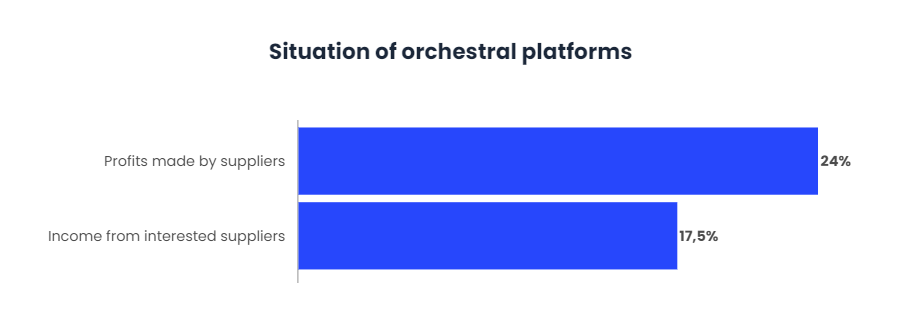
In this context, one of the most relevant assets are the platforms, which function both as a service provider and as a business model at the same time. These kinds of providers play a fundamental role in the ecosystem by offering consistent and reliable components that make application providers more productive.
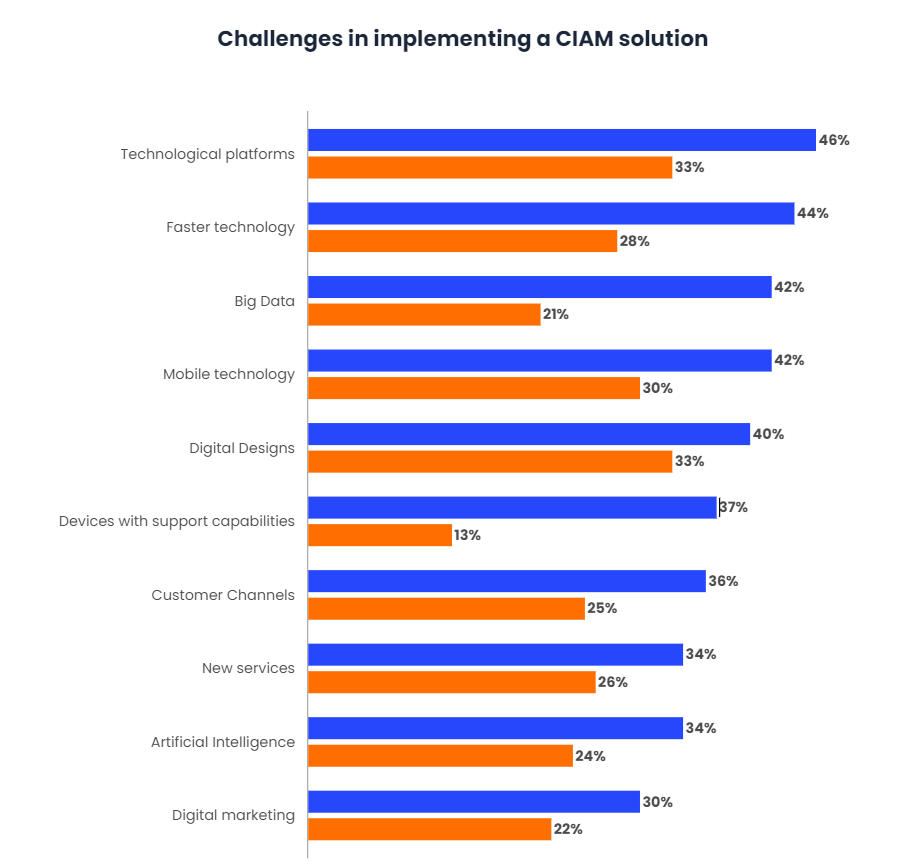
In this way, platform providers effectively connect many application providers to each other and to end users, defining critical common interfaces as well as reusable components.
Companies such as Red Hat, Visa or Uber are typical examples of platform orchestrators, however, companies such as General Electric or Philips are building digital platforms that take on the role of orchestrator.
The General Electric Predix platform plays the role of orchestrator in the equipment industry, due to the growing influence of Fintech companies. The financial sector is evolving towards a model in which banks will become orchestrators on digital platforms.
As a result, industry boundaries will blur dramatically as platforms reshape industries into interconnected ecosystems. However, visionary companies are recognizing that as each business becomes a digital business, together they can make changes in a much larger scenario.
Conclusions
Understanding the functioning and dynamics of business ecosystems based on the implications of digital transformation is becoming increasingly critical. It is therefore necessary for every company on this path to have some clear points:
-
- The design of an innovative business model implies the redesign of the business ecosystem.
- Ecosystem management needs a Me to We change of mentality, which will mean that the company will have to adopt an Open Innovation development approach as part of its corporate DNA.
- In the era of digital transformation, the role of orchestrators built on digital platforms is essential in the design of innovative business ecosystems.