




The World Cup Logistics Circus
 Yanira Villegas


How Millions of Fans, Tons of Cargo, and Three Countries Are Orchestrated Without Losing Their Minds
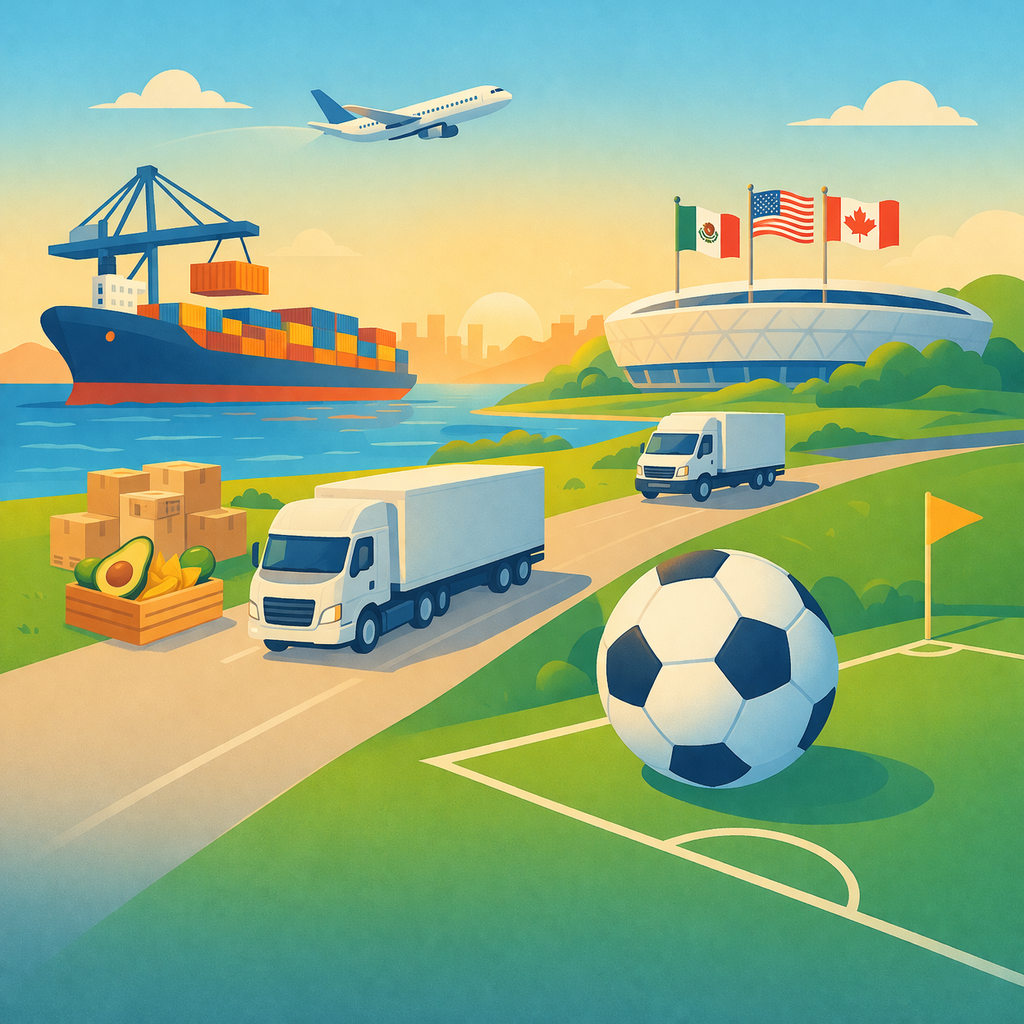
You think planning your family reunion is tough? Try organizing a party for several million of your closest friends, spread across sixteen cities, in three countries, all while ensuring that exactly one specific, highly regulated leather sphere is in the right place at the right time.
Welcome to the logistics behind the 2026 FIFA World Cup, the largest tournament in football history: 48 teams, 104 matches, three host countries, and an audience expected to exceed 5 billion viewers worldwide.
We’re talking about coordinated logistics on a scale so massive, it makes a military invasion look like a game of Tetris played by a toddler. Let's pull back the curtain on this beautiful, terrifying chaos.
The Journey of a Thousand Containers (and a lot of Guacamole)
The logistics of a World Cup don't start when the first fan buys a ticket. They start months, sometimes years, in advance, at a bustling port somewhere, where the first of thousands of containers is being loaded.
What’s in these containers? Oh, just the bare necessities: goalposts, VAR screens, several hundred tons of turf, enough merchandise to clothe a small nation, and, most importantly, food.
Think of the food. The sheer, ungodly amount of food. We’re talking about an army of 3PLs (Third-Party Logistics providers) tasked with creating a cold chain so flawless, it could preserve a snowflake in a volcano. They need to move perishable items from point A to point B across three different regulatory systems (looking at you, US, Canada, and Mexico), ensuring that the guacamole doesn't turn into a biohazard and that the beers are, well, not warm.
From the main ports, these goods move to massive terminals and specialized food storage facilities, where they wait like eager substitutes on the bench, ready to be called into action. It's a synchronized dance of customs agents, warehouse managers, and a whole lot of temperature-controlled trucks. One mistimed delivery, and you’ve got a stadium full of angry fans, which is a logistical problem of a different kind.
At previous tournaments, 3–3.5 million fans attended matches in person, with fan zones attracting up to 1.8 million additional visitors—all of whom expect cold drinks, hot food, and zero delays
Land, Sea, and "Oh My God, Are We There Yet?"
So, how does all this stuff, plus the players, referees, and millions of fans, actually get around? By utilizing the Holy Trinity of Transportation:
1. Sea Transport: The Heavy Lifters
This is for the heavy stuff. The goalposts? Put 'em on a ship. The mountains of branded t-shirts? Send 'em by sea. It’s slow, yes, but when you need to move a container the size of a small apartment, you can't beat a massive cargo ship. These unsung heroes of the sea ensure that the stadiums are built and stocked before the first whistle blows.
2. Air Transport: The Panic Button
Player needs a replacement shin guard? Send it by air. One city ran out of hot dogs? AIRLIFT THE FRANKFURTERS. Air transport is for the high priority, "we needed this yesterday" items. It’s also how the teams get to zip around, ensuring that Cristiano Ronaldo's hair is always perfectly coiffed, no matter which timezone he's in.
3. Road (and Rail) Transport: The Last Mile (and the longest one)
This is where the real fun begins. The "last mile" is the final, agonizing leg of the journey, from the warehouse to the stadium. It involves navigating city traffic, road closures, security checkpoints, and the baffling riddle of why every GPS in the world seems to lose its mind when it gets within five miles of a major sporting event.
This is where logistics get personal. During the 2022 World Cup, over 3,000 buses and 6,500 drivers were deployed to move fans and staff between venues.
When the Circus Meets Softtek: Your Logistical Safety Net
At this point, you're probably thinking, "This is impossible. Someone is going to forget the balls. They’re going to run out of cheese for the nachos. It's going to be Fyre Fest, but with offsides rules."
And that’s where Softtek steps in, ready to save the day (and your sanity) with our digital supply chain and logistics wizardry. We’re not the acrobats in this circus, but we’re the guys who make sure the tent doesnt collapse.
Softtek to the Rescue!
- Our AI Agents Are the New Crew: Forget old-school tracking; our AI Agents are like digital ninjas. They don’t just "track" your cargo; they proactively hunt for delays, negotiate with digital customs interfaces, and fix problems before a human even knows they exist. They're the smartest teammates on the pitch.
- Engineers Who Actually Speak "ML": You don't need a generic "Guacamole Forecasting" tool; you need a system that fits your specific mess. Softtek has the specialized engineers to build and adapt the exact Machine Learning models your company requires. Whether it’s predicting nacho-cheese depletion rates or optimizing turf-irrigation schedules, our team builds the brain your logistics need.
- Managed Services: The Logistical Xanax: We take responsibility for your complex logistics applications, monitoring your systems 24/7. We’re like a nice, warm blanket for your supply chain, ensuring you sleep soundly while we handle the real-time visibility of a container full of foam fingers.
So, Grab Your Nachos and Enjoy the Show!
The next time you watch a World Cup match, take a moment to appreciate the real beautiful game: millions of tons of equipment, food, and people moving seamlessly across borders, cities, and systems.
It’s a circus. But it’s a beautiful, terrifying, incredibly well managed one.
And while megaevents like the World Cup are extreme, the lessons they reveal apply every day. Visibility, resilience, automation, and intelligence aren’t “nice to have”, they’re the difference between order and chaos.
The circus just makes it easier to see.
As logistics ecosystems grow more complex, so do the ways organizations manage visibility, coordination, and resilience across operations.
Learn more about how this is evolving in Softtek’s Supply Chain & Logistics capabilities.


.webp?width=352&name=DALL%C2%B7E%202025-03-13%2012.59.31%20-%20A%20breathtaking%20horizontal%20digital%20painting%20in%20a%20fine%20art%20paper%20cut%20collage%20style%2c%20symbolizing%20nearshore%20digital%20collaboration.%20The%20artwork%20features%20a%20%20(1).webp)