 Alex Camino


What does the future of work and play look like? According to our executive speakers from SAP SuccessFactors and Compass Group, during our recent Digital Innovation X Leadership Forum, our future may closely resemble the Covid-19 recovery state we live in today. From the start of the pandemic, organizations, employees, clients, and consumers had to make substantial adjustments to how they worked, lived, and played. Things shifted quickly, and nearly every human on the planet was impacted. How much of our new behaviors, expectations, and working styles will stick over the long term?
Read on for a summary of the topics discussed and insight discovered during this virtual fireside chat.
Has the future of work already arrived? Perhaps.
Redefining the employee experience
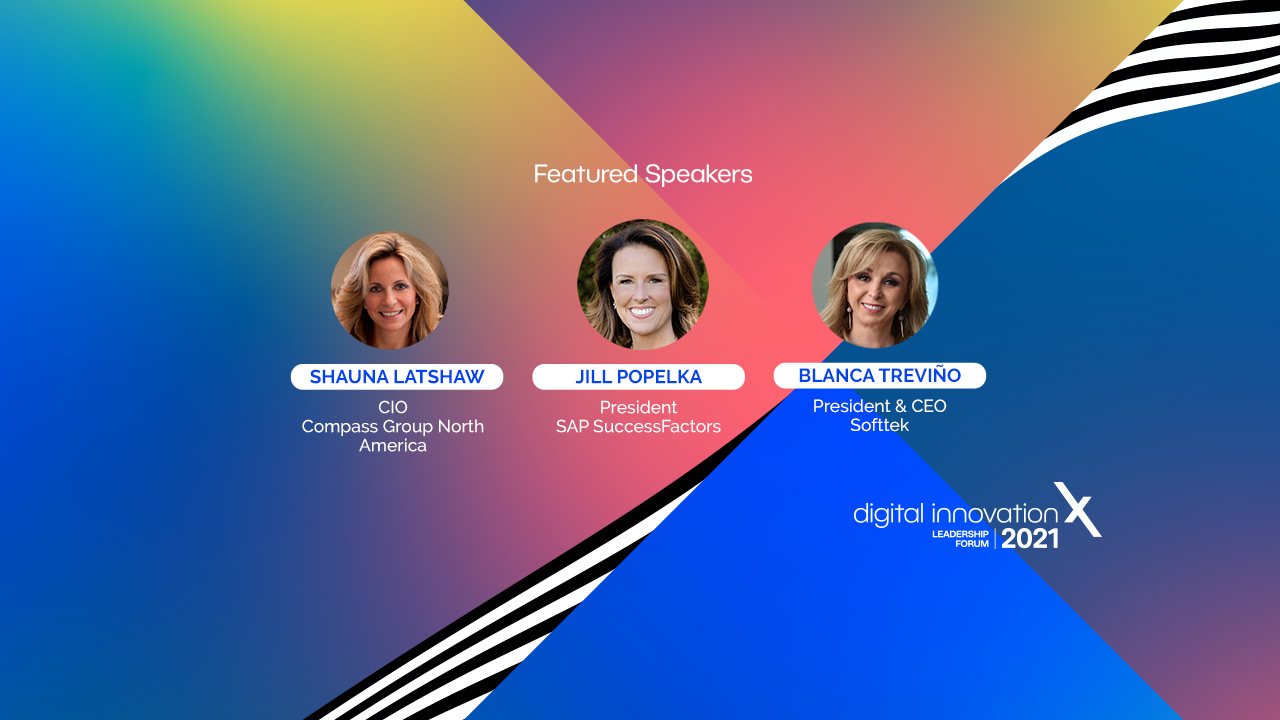
Blanca Treviño, President and CEO of Softtek, kicked off our virtual fireside chat by asking our executives what kind of adjustments their organizations, clients, and employees had to make during the pandemic and initial shutdown. Jill Popelka, President at SAP SuccessFactors and Shauna Latshaw, CIO at Compass Group, responded in consensus noting quick changes were made as early as March 2020 to enable their teams to operate remotely when possible and worked hard to maintain essential operations while safely maintaining social distancing. IT rallied and equipped distributed teams with the tools they required to work remotely and sustain operations. As teams mastered video conferencing, chat tools, and sorted out the bugs of working online, new dynamics emerged.
Providing a digitally inclusive experience for all workers is now critical. "When you're hybrid, you never want there to be this have versus have-not mindset," noted Shauna. To combat this new gap, Jill suggested simple hacks like giving a remote team member a "seat at the table" using tablets when travel is not an option. Shauna also noted supporting a diversified food service organization of 280,000 employees was a challenge, as much of what Compass Group does is customer-facing, serving a broad range of industries including education, corporate, travel, fine dining, plus events and arenas, to name a few. While some parts of the organization, like travel and hospitality, were temporally shut down, essential operations like hospitals were booming. Her team's focus quickly shifted to managing food supply chain logistics and fast-tracking new and safer ways to complement the employee and patron experience, refining their service experiences around speed and safety.Evolving culture
While establishing new rhythms, amazing things also started to happen culturally. As people started connecting remotely, home and work environments began to blend, and deeper personal relationships were fostered as day-to-day professional and personal life started to converge. Kids and family members are often within camera view, dogs bark, and doorbells ring, giving a new dimension to workplace dynamics.
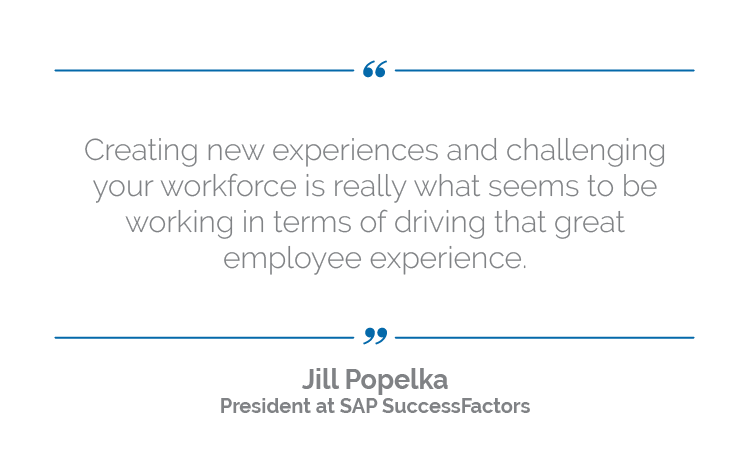
With that fluidity, leaders discussed how to preserve their organization's culture and how it took a leap of faith and a mindset change to ensure cultural continuity and growth. "I think that was a big adjustment for all levels of our organization," noted Blanca, but despite not being able to travel to the countries within Softtek's global footprint physically, she indicated that Softtek's culture is still strong and perhaps evolved for the better; now more human and compassionate than ever. Jill added, "As leaders, we have to pay attention because everything we say is taken as a decision and an indicator of what behaviors are accepted within our organization."— with limited face-to-face time, leaders now need to be conscious of this fact. Further, Jill mentioned that a future successful inclusion strategy might include next-gen tools that can help leaders identify signals when employees are not being heard on calls, and identifying high demand hidden skills, certifications, and growth ambitions to create a more fulfilling employee experience while giving the organization a competitive edge.
The "Great Resignation"
What happens when organizations are not ready, willing, or able to embrace an agile mindset? Unfortunately, employee turnover skyrockets. Today, that phenomenon is called the "Great Resignation" and is a critical issue many organizations now must address. Amidst an already scarce talent market, organizations must contest with the reality of millions of workers saying, "I quit." Jill highlights, "In every industry, they're talking about losing good talent. There are job opportunities everywhere that can't attract the right talent." Employers are now looking for new ways to quickly close the gap and meet the needs of those who are looking for a combination of more money, a work-life balance, career growth, and ongoing professional development opportunities. Specifically, as millennials and digitally native Generation Z employees become a more significant part of the global workforce, rethinking the employee experience and providing the right environment to attract and retain top talent with in-demand skills will be required. This has become a critical setback for organizations to thrive when high employee churn is not a problem leaders want to add to their already full plate.
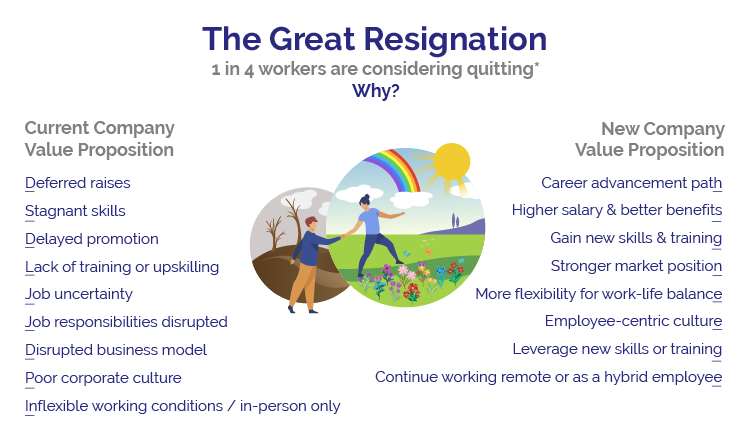
*Prudential Financial, Pulse of the American Worker survey
Has the pandemic changed customer expectations? Yes!
Balancing customer and employee centricity
During the pandemic and up to today, both executive panelists spoke highly about the importance of empowering their distributed teams. It was unanimous that employees need to trust their company, understand the value of coming to work, and have the right technology to support their efforts. Furthermore, Jill points out, "You have to focus on a great employee experience to drive a great customer experience." Consistent with this, a recent Forbes article highlighting a Blake Morgan study on employee and customer experience found that 79% of employees at companies with above-average customer experience are highly engaged in their jobs.
.png?width=555&name=customer-employee-experience%20(chicken).png)
The customer and employee experience is not a zero-sum game. The most successful organizations solve for both sides of the equation as they go from shutdown to full-blown. Through her diversified food service experience, Shauna notes different front-of-house solutions that have helped Compass Group brands continue to provide food service and look to reopen safely, including kiosks, touchless payment implementations, customer sentiment analysis, and even entering a promising ghost kitchen market to offer customers seamless deliveries and more options! But in addition to customer-facing investments, Shauna explains we're "just at the tip of the iceberg" with back-of-house innovations to support talent resources, especially in food service. Think of it like the hybrid work model, but the common denominator is between customer-and employee-facing investments. In this regard, Jill agrees we'll start seeing data used for employee behavioral analytics in the same way we use it for customers, among other parallels, to provide a more meaningful experience.
Removing friction from the customer experience
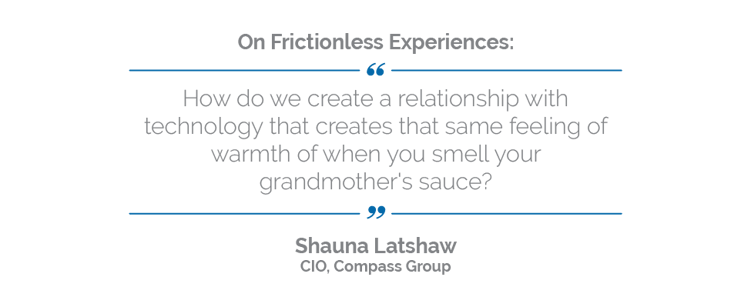
As more parts of the world put the pandemic behind them, our experts expect the enterprise to make more investments in reducing friction along the customer experience. This will be important to continue to mitigate health and safety concerns that will outlast the pandemic and offer improved levels of convenience now possible at scale. But Shauna noted there will still be a demand for human analog experiences. After all, "We love breaking bread with each other." Going forward, businesses must pay close attention to how their offline and online customer experience is being affected by the removal of friction, careful not to lose the human authenticity needed in critical touchpoints.
The big takeaways
Is this our new normal, or merely a stopgap to sustain us through the pandemic recovery? Our panel concludes it depends on a variety of factors. Still, in large, Jill Popelka sums up the conversation perfectly: "The most important thing we can do is find a way to lift up human ingenuity," seeing a future where employees and customers are supported in new ways by technology.
In summary:
- Organizations that thoughtfully balance employee and customer centricity will see greater success in the new normal.
- The customer experience will continue to emphasize frictionless convenience with the right level of human connection; the employee experience will continue to emphasize soft work features like team connectedness, trust, encouraged experimentation, and clear instruction and opportunities.
- Innovation and empathic leadership are essential in a talent-scarce market. Leaders need to understand why people resign and enhance the organization’s employee value proposition and culture to attract and retain the right talent. Having a competitive compensation helps, but Millennials and Gen Z, who increasingly account for more of the workforce, need more than dollars to stick around.
- To bridge the talent gap, businesses must create innovative ways to discover, promote, and enhance human skills. Augmenting their workforce with digital labor and implementing HR tools that leverage data to help create meaningful experiences from recruiting through retirement will undoubtedly help bridge the gap.
Save the link and stay tuned for our fall 2021 Digital Innovation X Leadership Forum speaker lineup!