
 Softtek


As 2020 approaches, many organizations are considering improving their Customer Experience (CX) improvement strategy. Even with the great expectation about CX in recent years, many brands are still struggling to deliver an experience that delivers the desired results, increases customer loyalty, improves customer satisfaction, and achieves a successful end result.
Brand Trust
Customers are becoming more and more demanding with the experiences they have received, and for this reason they “demand” from the brands in which they trust ever more personalised and satisfactory levels of attention.
Within this context, customer loyalty (or Brand Trust) can be defined as “the process of establishing a level of trust and connection that inextricably links customers to the culture and attributes of the brand”.
Although it may seem the opposite, the loyalty of a customer is not only given by good prices or good quality of the product, but there are currently many factors involved that are necessary to ensure the loyalty of a buyer. According to recent research, two-thirds of customers (66%) say they are attracted to brands that “say what they will do and keep their promise.
Today, thanks to a multitude of communication channels through which brands can promote their products, customers have more options than ever when it comes to choosing between a great combination of hundreds of brands and thousands of products and services. In such a fiercely competitive environment, brand trust has become an important differentiator.
However, the main reasons that make a brand trusted by consumers include:
- Quality products or services.
- Good ratings and comments.
- Fair price for products and services offered.
- A good treatment to the client and to the buyers who have arrived through them.
At present, it does not appear that a large percentage of companies are complying with the established minimums, as only 33% of customers fully trust the brands they consume.
The good news is that when brands can earn a customer’s trust, the benefits are enormous. Consumers will first turn to the brand they trust when making a buying decision, be more loyal to companies, and defend the brand’s reputation when necessary.
What do customers expect?
Today’s buyers expect more from their customer experience. In fact, they care how they are treated almost as much as the quality and price of the product. But the challenge here is that while the organization can excel at personalized service, making each customer feel like the most valuable customer can be difficult.
It is a level on the scale of service that requires a depth of knowledge that cannot be easily analyzed from the dark recesses of a simple customer relationship management (CRM) system or an individual’s memory.
Fortunately, modern enterprise relationship management (ERM) software solutions give organizations of all types and sizes the ability to track, access, evaluate, and share information not only from customers, but also from employees, suppliers, and business partners.
Technological advances have made ERM software easier to use and more valuable than ever. The new ERM platforms now function as a stand-alone tool or additional software for CRMs or other systems used by each company.
Artificial Intelligence as an ERM enhancer
Today’s main ERM applications work with Artificial Intelligence (AI) and Machine Learning. Therefore, companies that use them not only benefit from deep perceptions of relationships, but also gain a boost in productivity.
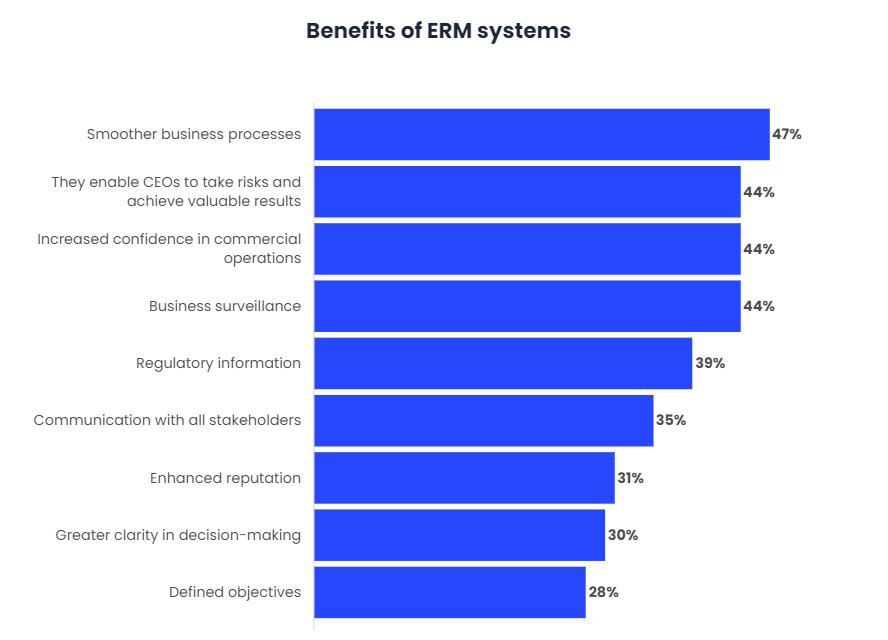
ERM software aggregates internal and external data to create an accurate picture of the strength and lifetime value of customer relationships at the organizational level. In essence, Artificial Intelligence can improve the quality of customer relationship data and provide the intelligence companies need to develop more successful business plans and strategies.
Time saving
Business professionals lose up to 5 hours per week on data entry, time that could be spent on higher-value activities. When data automation is integrated into modern ERM solutions, this responsibility is shifted away from employees. So you’re not only saving time, you’re increasing productivity and morale.
An ERM system does much more than simply automate the data collection process. In fact, companies can also automate the visualization of key relationship data and the distribution of actionable information. For example, it can automatically deliver a relationship analysis to the inboxes of business developers and account representatives before meetings with customers.
This effortless access to key relationship information makes it much easier for sales and business development professionals to provide personalized experiences to potential customers.
While at first it may appear that the quality of information will be lower, data automation actually improves the quality of knowledge about employees, customers, business partners, and even competitors.
In fact, it has been proven that extracting data from sources used daily, such as email signatures, meeting invitations, and social networking profiles, reveals richer and more accurate relationship information.
Customer Protection
On the other hand, an ERM tool can prevent 81% of customer loss by improving relationships. This benefit is supported by the data obtained in the last report where it is clear that, although 96% of dissatisfied customers do not complain and simply continue, companies can improve this situation thanks to ERM.
Even if the customer has not expressed dissatisfaction, it may exist and this is where modern ERM solutions can help synthesize data that may have gone unnoticed, using algorithms to identify factors that may indicate a change in the strength of the relationship, such as a drop in correspondence or an increase in unopened emails.
As an added benefit, some systems will send email alerts about relationship trends, making it even easier for organizations to be more proactive about happiness and customer retention at the first sign of deterioration.
Improves visibility into business issues
Many interprofessional challenges arise from the same problem: the lack of visibility of the complexities of trade relations. When you have a modern ERM system, you can visualize connections through relationship mapping, which makes it easier to clearly identify problems.
Too often customer relationships rely heavily on a single relationship match, leaving organizations open to significant risks. The ideas of today’s Artificial Intelligence-based ERM solutions allow attention to be focused on the relationships that will make the biggest difference in both the short and long term.
For example, companies may find that they need to nurture more C-level contacts with a specific customer, as their connections carry too much weight in middle management.
Conclusions
For any business, improving the customer experience is the key to long-term growth. ERM software enables the capture, storage, and evaluation of vital customer data that has the power to drive stronger relationships and better business results. Thanks to IA-driven relationship intelligence, companies can reap greater benefits from an ERM, anytime from any device, without tedious maintenance.
Brands must improve their treatment of customers as individuals: real people with names, families, interests, etc. It is important that each company listens to its customers to provide better experiences, know their desires, needs, while obtaining demographic or personal information that will ultimately facilitate a better customization.
All these are important factors in building consumer confidence. But true connections are created when customers become human, and brands can offer other highly relevant experiences that touch the human factor. This may be developing social and community programs for the common good or simply taking the extra time to go further and thoroughly resolve a customer service consultation.