
 Softtek


At a time when most companies are considering starting a proof-of-concept (POC) business automation process, a proof of concept (POC) can be the perfect catalyst to take the first step.
A POC allows a team to deploy an automation solution that works with existing systems, applications, data, and processes in their target environment. This process allows you to visualize whether or not a solution will work in the confines of the custom business environment. In addition to providing the opportunity to validate the selected software or platform and the commitment of the resources involved to ensure the success of a broader program.
Main benefits
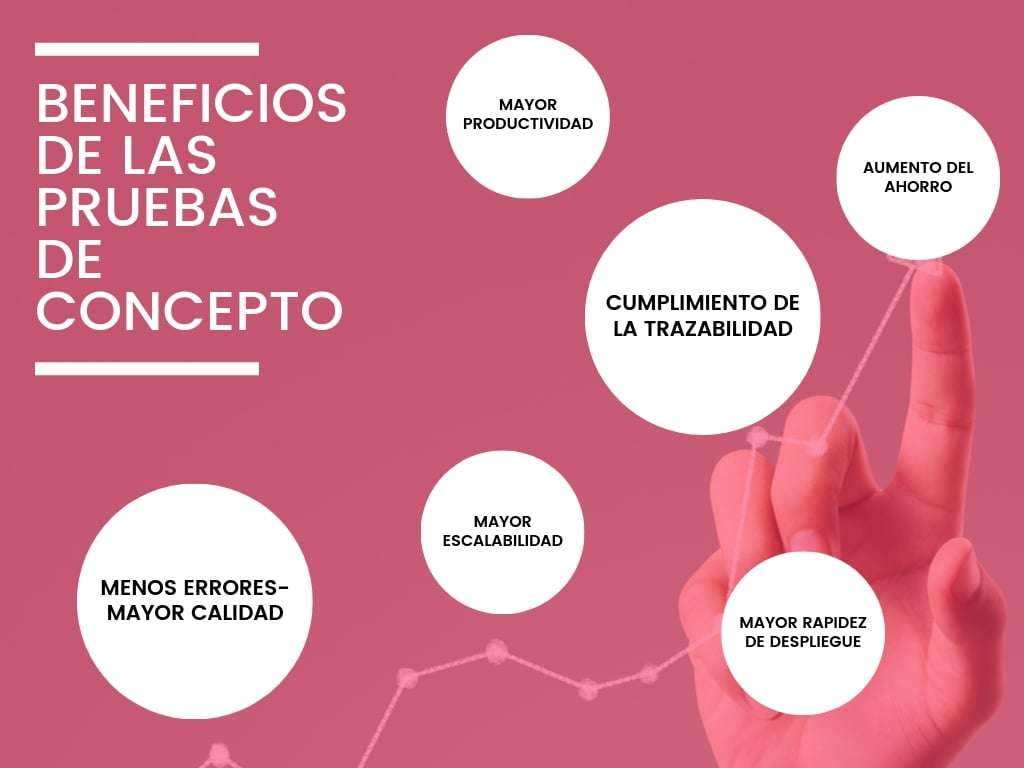
One of the main features that defines proofs of concept is the ease and speed with which it can be implemented, thanks to the need for minimal technology.
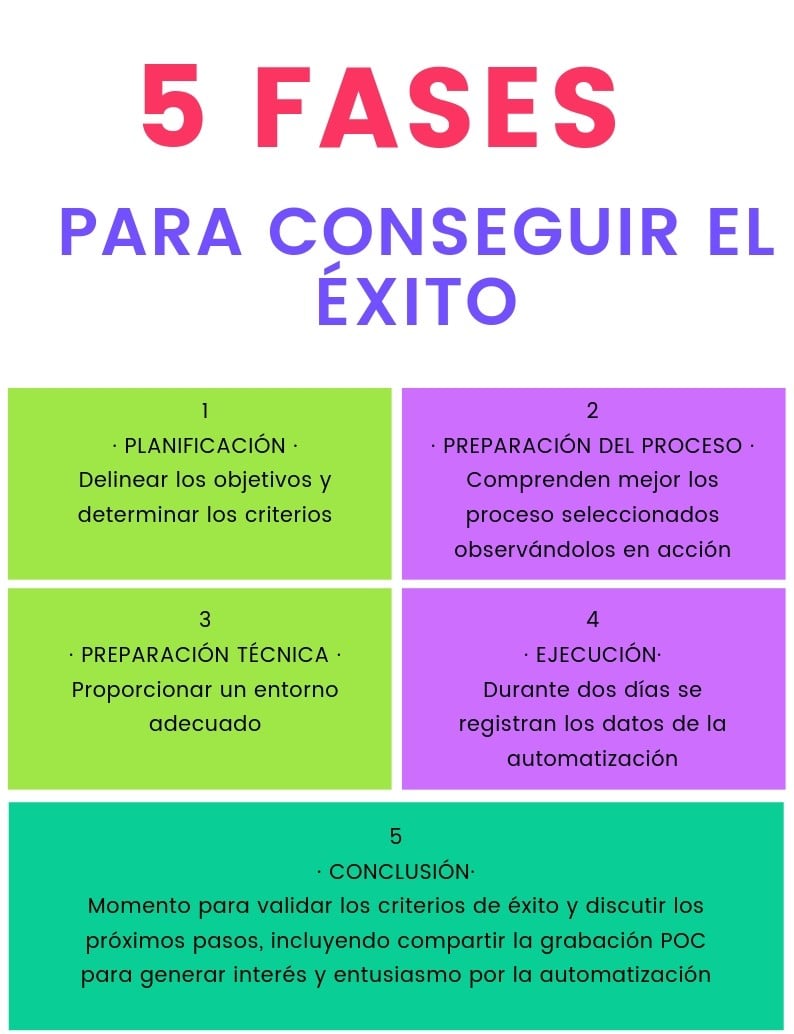
To be successful, a POC must be treated as a project with a clear objective, a defined start and end date, and a fixed allocation of human and technological resources. Although BCCs are meant to be rapid, robust project management and a disciplined cadence of activities are required.
The healthcare sector is one of the most benefited by proof of concept, for example, the US company Sansoro, offers this service to its customers, streamlining the sales cycle, increasing innovation and lowering the cost of time and IT resources.
Its proof of concept is a cloud-hosted interface that enables health IT developers to bring their innovations to market faster. Compared to competitive test environments that typically include a single server with test data, your POC connects to environments across multiple EHRs, allowing health IT developers to manually test workflows in one real environment.
Proof of concept in the IoT world
The area of health is important, however, once again IoT technology attracts attention, but despite all the benefits of POCs, the latest research has shown that 60% of IoT initiatives stagnate at the testing stage d and that only 26% companies consider their IoT initiative to be a complete success.
For some industry professionals, these statistics are worrisome. A PoC is a crucial stage for every IoT initiative, providing a platform that enables enterprises to carefully plan the design and details of the deployment, before a full deployment across the organization.
In particular, for smart city initiatives that incorporate a number of stakeholders, including government authorities, public service providers and citizens themselves, it is imperative that a pilot phase be incorporated into the An IoT project, ensuring as smooth a deployment as possible.
And with 65% of the world’s population projected to live in smart cities by 2040, a PoC will be vital to test how cities can use IoT technology to take advantage of multiple measurable benefits.
Within the world of accelerating all technical aspects, Hong Kong’s approach to smart cities is constant and pragmatic. The culmination of several years of investment resulted in the launch in December 2017 by the Hong Kong Government of the Smart City Blueprint for Hong Kong, which defines what should be a smart city, and draws up development plans until 2022.
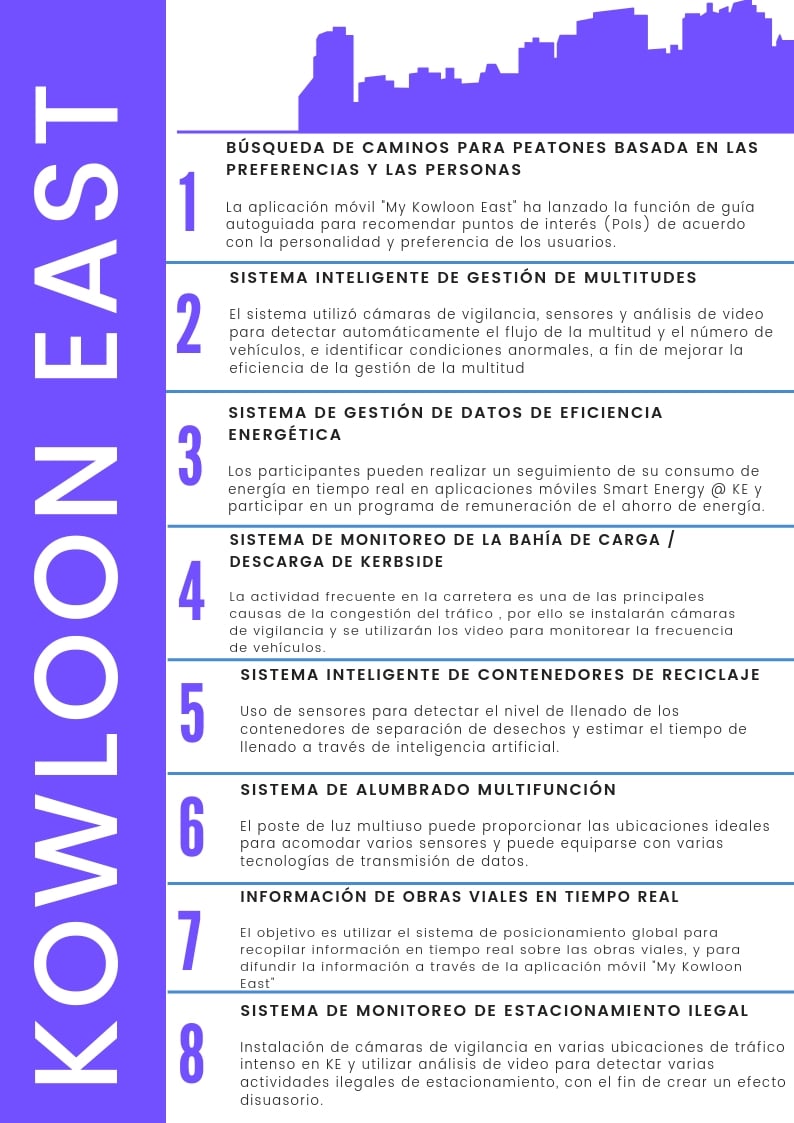
A key part of achieving many elements presented in this plan is the success of the Kowloon East Smart Pilot District. Eight concept tests are currently underway throughout the KE enclosure. The trials were selected following a process of public participation to understand the needs and expectations of the community.
Another clear example of how proof of concept can help the transformation of cities into smart, is that carried out by Tata Consultancy Services and Gfi Informatique in the French city of Belfort.
The proof-of-concept provided Belfort with real-time data to make decisions that can improve the urban bus service, consisting of five routes. As a result, the city is on track to save up to 250,000 euros a year.
In addition, existing sensors on Belfort’s bus network, such as GPS devices, were also leveraged to measure speed on different route sections between each stop on a daily, weekly and monthly basis. They were able to identify which points of congestion, which gave city officials the ability to make evidence-based changes for the first time.
Recently at MWC Barcelona, one of the most innovative projects of last year was presented, the proof of concept of Smart City, a collaborative project between Juniper Networks and CENGN. Which shows a complete end-to-end intelligent network infrastructure with a converged ODL-controlled multi-tenant network, capable of managing numerous service providers that are dynamically operated by a single administrator, ” infrastructure as a service.”
Generally speaking, any IoT project structure will require an element of flexibility, as there will be changes needed to optimize the implementation of the technology and associated processes. This is another reason why a PoC is essential, so that the results of the project, as well as any problems along the way, can be adjusted as much as possible, before a full deployment, and perseverance is key to a successful deployment.
Smart city initiatives will require a significant amount of resources, both financial and people, and this could encourage some resistance to change. However, with a partner ecosystem and collaboration at all levels from the start, the key principles are in place to provide the foundation for a successful and scalable IoT deployment.
Are there alternatives to POC?
Regardless of all the benefits that proof of concept can bring, professionals in all sectors are always looking for new options that will give them better results, so in recent times they are wondering if there are viable alternatives to POC.
Virtual and augmented reality can probably be a substitute as it is able to provide another way to test the possibilities, in particular through the simulation of the experience.
But it is more of a complement than an alternative to POC. However, all these solutions should not make us lose sight of an essential principle of reality: the importance of calculation and data in each innovation process is offered only by proofs of concept.
One sample of how virtual reality complements proofs of concept is the project presented by WebXR, an Internet-connected sensor that brings data from the real world to the virtual world.
Conclusions
There is a great risk associated with each new business, so it’s important to try a business idea before expanding the business. Simply demonstrating that a business idea works and is commercially viable is a great start.
The POC involves thorough research and review, and is presented as a single package to stakeholders. It includes an income model review, in which companies show projected revenues for products and services, and indicate the cost of development, long-term financial projections, and how much it costs to maintain and market the service. It’s a great way for a company to evaluate itself internally and on proposed acquisitions and projects.
All these benefits are even more tangible in specific areas such as health or the Internet of Things, for example, in building Smart cities the preview can save large amounts of money while solving problems that can exist in the future.