Dell Technologies, with the help of 20 experts and academics from the world of technology and research led by the Institute for the future (IFTF), has produced a report called “The Next Era of Human-Machine Partnerships” that seeks to help to be prepared for the future, since, according to the report, all organizations will be technological by 2030, so changes will be experienced in both businesses and consumers.
85% of the 2030 papers do not yet exist
If technological transformation will lead to companies in 2030 being technological, businesses are going to have to join this change, modifying some of their bases, such as staff preparation or future infrastructure. Since, according to the report, much of the work (85%) to be carried out in 2030 still does not exist and almost half of companies could become obsolete in the next 3-5 years.
Not only will new jobs be invented, but the whole process will change. The work will lack a physical place and will be limited to one set of tasks. Changes will occur so quickly that the desired competencies will not be so limited to the individual’s knowledge as their ability to acquire new knowledge. Dell even says that this knowledge will often be “instantly” from the support of technologies such as VR/RA.
Even job search will be affected by this revolution thanks to machine learning technologies. How? By using advanced database matching technologies, you’ll be tasked with finding the right candidates, selecting skills and optimal skills for task development. Skills and skills that will continue to be crucial will be the ability to interpret and analyze information, as well as to give productive output to algorithms.
Because of this, in the future caring for the personal brand will be fundamental to the labor market, especially in digital media as skills and skills are increasingly researchable thanks to data visualization, reputation and analysis.
But what are the technologies that are the protagonists of this revolution? Examples include Artificial Intelligence (AI), robotics, Virtual Reality (VR) and Amentada (RA), the Internet of Things (IoT) and Cloud Computing, which through this service will save costs on technical infrastructure and access to information will be even more expansive. These, along with advances in big data, software and increasing processing capacity will drive technological transformation. Built-in and custom AI wizards, for example, will include predictive and automated processes.
“Never before has the industry experienced such disruption,” says Jeremy Burton, Dell’s DIRECTOR of MARKETING. “The pace of change is very real, and now we are in a make-or-die scenario. To succeed in the age of man-machine partnerships, every business will have to be a digital business, with software at its core.” Burton says that “organizations will need to move quickly and build capacity on their machines, prepare their infrastructure, and train their workforce to drive this change.”
As Burton says, digital disruption is transforming industries, making it difficult to predict the future of the industry. According to the Dell Digital Transformation Index, more than half (52%) of the decision-making positions of 16 countries have experienced major disruptions in their sector as a result of technology.
A new relationship will be established between man and machine
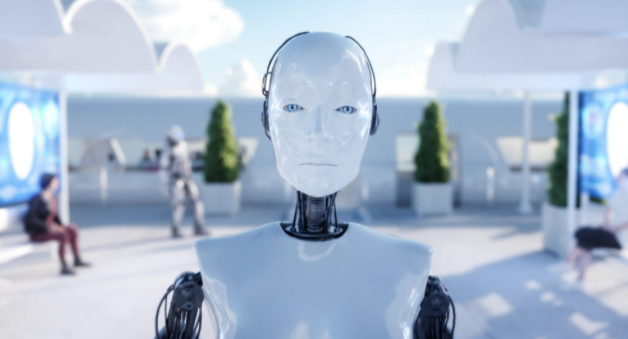
Digitization also affects man’s relationship with the machine, transforming it and endowing it with efficiency. According to the study, in 2030 the role of the human being will be to develop creativity and entrepreneurial mindset, getting rid of their limitations and acquiring skills. This will align with the role of machines, focused on acceleration, automation, efficiency and productivity.
“We have been exposed to two extreme perspectives on machines and the future: the problem of technological unemployment, driven by anxiety, or the overly optimistic view that technology will solve all social and environmental ills,” he explained Rachel Maguire, research director at Institute for the Future. “Instead, we need to focus on what the new relationship between people and technology will look like, and prepare for it. If we undertake the difficult task of establishing the conditions for human-machine partnerships to succeed, their impact on society will enrich us all,” he concluded.
Based on this new relationship between man and machine, it will be essential that individuals know how to integrate both work and personal life – different automation tools.
Organizations will focus on increasing security and innovation
In the future technological world, it will be vital for organizations to strengthen security, becoming a technological to a business problem. Because digitization will lead to digital and physical identities mixing, so companies need to convey enough confidence to their consumers to feel their digital data is safe. Not only will it be the maintenance of security, but also to design a strategic plan that can respond to possible failures.
On the other hand, the demand of the digital consumer will be greater in 2030, especially in the times, since, by reducing latency, real-time responses and automation are made possible, delay in any service can be a major problem for the Organization.
As for workers, a change will be needed regarding the values of work, as it is changing in the lives of digital natives: they need jobs where they can learn, use their skills and make an impact. In addition, thanks to automation, employees will need tasks more focused on creativity, innovation, so this kind of activities will be needed in the workplace.



 Softtek