 Alex Camino


“Innovation” has become a religion today. Technology and marketing gurus discuss it nonstop - as if it’s the corporate Holy Grail. And of course we talk about it a lot here on the Nearshore blog because, well, we’re a technology company; and technology and innovation seem to go hand-in-hand.
But what seems to get lost in this conversation is the cultural shift that has to happen for innovation to take place. Innovation doesn’t just happen on it’s own. You don’t just invest a lot of money in technology and expect it to happen. Innovation must be fostered, nurtured, you need the right growth environment. And changing your culture isn’t easy.
But I believe there are three basic components you need in order to foster a culture of innovation. If you get this right you’ve built a good foundation for fostering the continuous creativity that produces innovative solutions and value for your company and your customers.
1. Technology must become a business function
We’ve talked about this before, but it bears repeating: your IT department needs to become a business department.
This means two things. First, your CIO needs to think like a business leader instead of a technology  leader. In a recent Forrester research report (which you can download here), the admonition to IT departments was to support the BT agenda. What does this mean? It means the CIO should focus as much on the customer as the sales and marketing leaders do.
And to focus on customer acquisition and retention requires innovative thinking. How can you out-think and out-maneuver your competition with technology? What creative things can we do with technology that can help the CMO and the VP of Sales do a better job?
Second, senior management needs to welcome the IT department into the inner sanctums of the business. This means embracing Agile methodologies into business planning and collaborative cross-departmental projects to create business value.
2. Form an ‘alliance’ compact with your employees
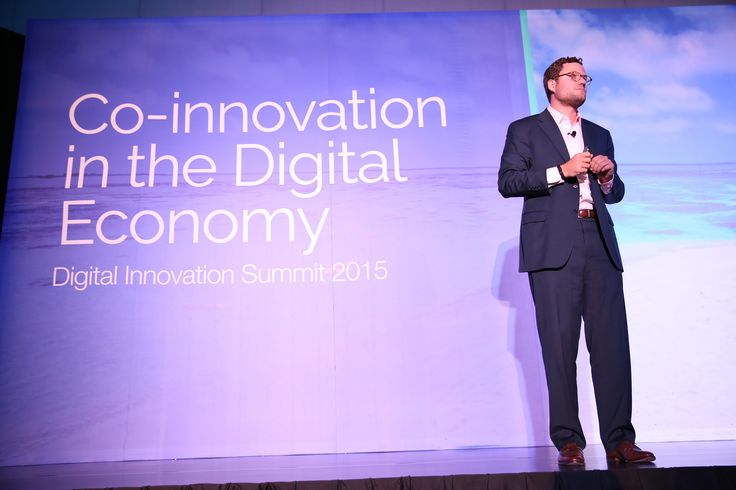
Ben Casnocha, during his keynote address at our annual customer conference “Coinnovation,” discussed the main thesis of his book, The Alliance, which he co-authored with Chris Yeh and Reid Hoffman.
Casnocha drew the comparison between the employee compact of the last century and the compact of today. During the industrial revolution, companies were seen as families, and employees had a job for life because they were part of a family.
Today that’s been replaced by the free agent compact. The company can fire you any time and for no reason at all. There’s no loyalty to the employee. As GE’s Jack Welch famously said in the 1990s: ““If you want loyalty, get a dog.”
Consequently your employees have zero loyalty to you, and are browsing LinkedIn for their next gig. That’s a recipe for dysfunction in today’s competitive landscape.
Casnocha suggests an alternative employee compact: The Alliance. The central component of The Alliance is the Tour of Duty. The company and employee join forces to achieve a mission that is important to the company and meaningful to the employee.
Casnocha said this relationship is mutually beneficial to employee and employer:
“’If you make our company more adaptable and more innovative, I will make your career more innovative and adaptive.’ And by that turn the employee says to the company, “If you help transform my career trajectory, if you make my LinkedIn profile look more impressive, I will help make this company more innovative.”
Adopting the Tour of Duty concept includes various trade-offs that can seem a little scary to conservative companies, but are highly conducive to attracting the kind of talent that fosters innovation.
For example, the company provides a safe environment for the employee to achieve transformative career goals that might seem incompatible with a long-term relationship.
Casnocha again: “What if what they need to really transform in their career means leaving your company some day? What if they want to start their own company some day or be CEO of their own company, or CIO of their own company? Usually that job is filled or usually a company can’t offer unlimited career development for all of their possible aspirations”
On the flipside, since today’s millennial employees are highly networked via LinkedIn, Twitter and Facebook, they can be expected to share their network with the company to help with innovative pursuits or to expand their market.
3. Embrace failure
A recent Marketing Land article declared that “Failure is the New R&D.” And while everyone agrees this is true of startups, enterprises are still very risk-averse. As Rakhee Das from Softtek’s Innoventures program stated: “[Failure] is exactly what corporate innovation programs are not about.”
But corporations must be willing to accept failure in order to innovate, because it’s in the failures that the lessons are learned and applied to the next iteration.
A variation adopted by Softtek is the small “i” innovation. According to Dhas:
“This is the low hanging fruit, not the crazy ideas. The things that are management friendly, that management understands, that they’re happy to take to our current customers. These are real innovations that can make a difference faster.”
Conclusion
Those of us in the technology industry tend to get caught up in the mutual admiration society of technologists as innovators. We quote each others blog posts, go to each others conferences, and laud the daring IT executives who have become business stars and thought leaders.
But at the end of the day it’s people – and culture. People are the ones who innovate, and culture is what makes innovation a part of your company’s DNA. Three basic ways to foster this culture is by turning your technology team into a business team, forming mutually beneficial alliances with employees, and embracing failure.