
 Softtek


Data can be a powerful tool for companies around the world. Leveraging customer and transaction data can provide the impetus for the most successful marketing campaigns.
However, in order to effectively leverage that data, organizations need to have an appropriate data strategy, which should be divided into three sections:
- Data Standardization
- Data transformation and automation
- Data Narration
These three points will be indispensable when it comes to obtaining a clear and concise vision of the information gathered. Most organizations collect data on video reproductions, website visits, downloads, etc., only to discover that they cannot effectively take advantage of all the data collected either because it is irrelevant or because it is inconsistent with the rest of the data collected.
Approach to a quality data policy
Today, 67% of executives recognize the potential of data to help them grow their businesses. However, according to the latest reports, more than half of business leaders recognize that the potential lies only in quality data.
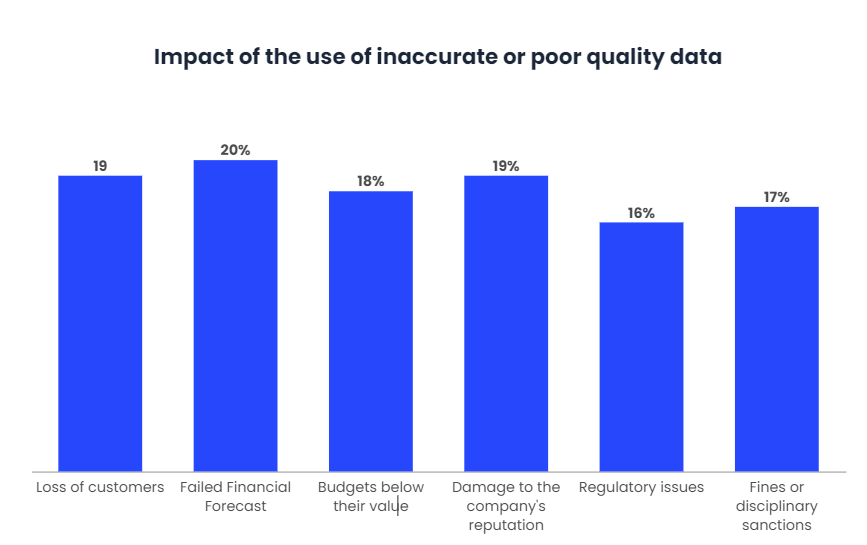
In order to obtain this type of data, it is important for companies to have a clear policy on how to collect data, what data to collect, how it is stored, who has access to it and what will be done with it.
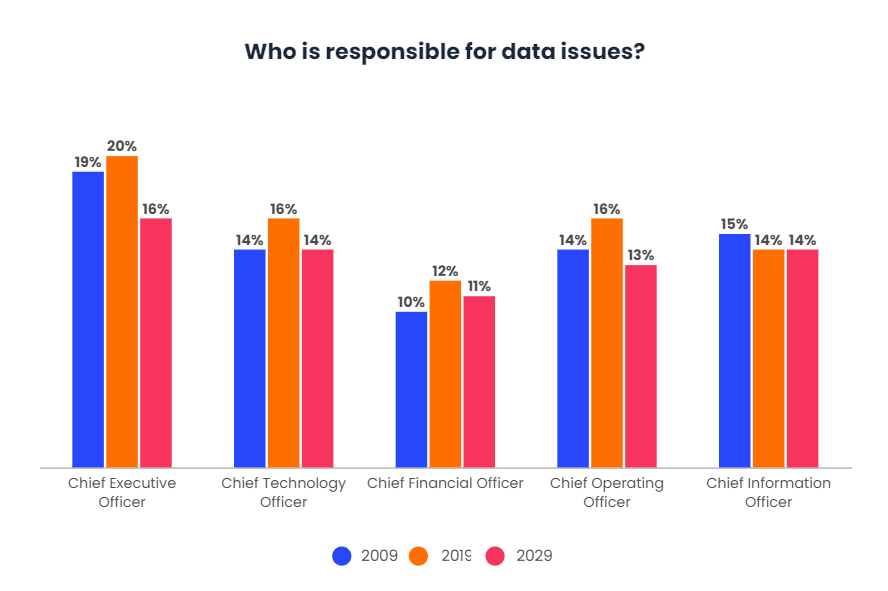
At the same time, they need a clear figure to define this data policy. When considering who owns the data, companies are divided over whether it is a function of the IT department or a function of the C-suite. Traditionally, this has been seen primarily as a role of the Chief Information Officer or Chief Technology Officer, however, this has evolved and is now seen more as a responsibility of the Chief Executive Officer.
This property will continue to evolve as business leaders seek to define where data strategies best fit within each organization.
Technological Architectures of Big Data
Any data strategy must be supported by a good technological architecture. Data management tools have been an obstacle for many organizations over the last decade and continue to be so today.
Currently, 43% of companies use data management software, compared to 25% who plan to invest in tools to help them manage data in the next 12 months.
Despite having management systems, the problems are evident according to business leaders:
- Data inaccuracy: A quarter of executives say accessing accurate data is a problem.
- Data processing: 23% say analyzing and processing data is their biggest challenge.
- Data silos: Access to data (20%), sharing data between different teams and functions (18%) and linking data in the organization (17%) are common concerns.
- Deadlines: Obtaining information that can be accessed in a useful time frame (18%) and whether data is in real time (17%) are common concerns.
These percentages demonstrate once again the need for a good technological architecture that supports the entire process of data management, from its collection to its final use.
The architecture of a Big Data system varies according to the infrastructure and the needs of each company, however, generally has some common components: data sources, real-time management, storage of both common and analytical data, the combination of batch processing and real-time processing and process analysis and automation tools.
In the past, a good management tool was the focal point for maintaining data security. Today, however, it goes further, it is a structured approach to modeling the elements that make up a company’s Big Data tools.
Therefore, the key objective of the architects in charge of designing that infrastructure must be to ensure that the technical systems and the structure of the organization match, and that in turn they can analyze all the data collected, maintaining security and supporting future paths, such as mobile integration that allows the exchange of information.
Benefits of a Big Data Architecture
In many cases, the large amount of data analyzed does not identify the value of each of them. Faced with these situations, the large technology companies have initiated various projects. The objective is to find the ideal solution to configure the necessary infrastructure to allow data transfer in business systems, leaving aside the traditional solutions of compressed folders or even USB.
Among the various projects that are coming to market is the option launched by Microsoft, Azure Data Share. This tool is just one example of how a well-defined Big Data technological structure can help in the management and exchange of data. However, there are more reasons:
- Supporting the democratization of data, which requires data sharing, quality, security and governance.
- Enable the “hyperconnected” enterprise inside and outside the organization.
- Foster a movement towards self-service and Citizen X.
- Move from historical reports to predictive and prescriptive analytics.
- Enable greater responsiveness to line of business (LOB) users.
- Prepare for new data sources, while becoming aware of new applications and use cases.
- Monetization of the information extracted after studying the data or obtaining statistics.
The monetization of data
The prospect of monetization is really interesting for the near future. As companies accumulate large amounts of data, they generate value in ways that they had not considered.
In the face of this new opportunity, companies will need to consider three important factors:
- Data discarded by one company can be valuable to others.
- Discard excess data. On average, between 60% and 73% of all data collected is not used.
- Integrating data from different companies and sectors can provide a more complete and nuanced picture of the information.
However, there are some obstacles on the road to monetization. When it comes to personal data, it is first important to ensure the total privacy of the user. That is why all personal information must be removed, isolating only those attributes that are valuable, through which specific individuals cannot be identified.
In the era of GDPR, companies have to advance in their analysis to determine which data is valuable and can generate quantifiable benefits and those that are not relevant.
Conclusions
Data is and will remain vital to business success now and in the future. Business leaders understand the enormous benefits of data-driven strategies and, despite the challenges, continue to move forward to make data-driven success a reality.
As the scope of large data becomes widespread, organizations will need to share this data with partners and customers. Big Data’s various tools provide a simplified approach that will allow companies to securely share, update, and monitor data.
Not only are greater technical requirements required, but both security and data integration contribute to the new challenges companies face every day.