
 Softtek


Innovation is key to corporate success. Innovative companies grow twice as fast, both in employment and sales, that companies that fail to innovate. However, it is surprising to see most European companies spend less on innovation than their competitors. Therefore, despite being an upward trend in innovation performance, more efforts are needed to ensure Europe’s global competitiveness. In this situation, it is necessary for companies to face their challenges, assuming new open innovation collaboration models that will drive business development thanks to diversified products and services, thus contributing to achieve their goal long-term business.
Exhibition: One-off events, joint work, free resources
Many companies begin the path to greater innovation by increasing their exposure to startups and an entrepreneurial culture. This is often done by running events, such as hackathons and competitions, through the provision of free tools, business resources, and sponsorship.
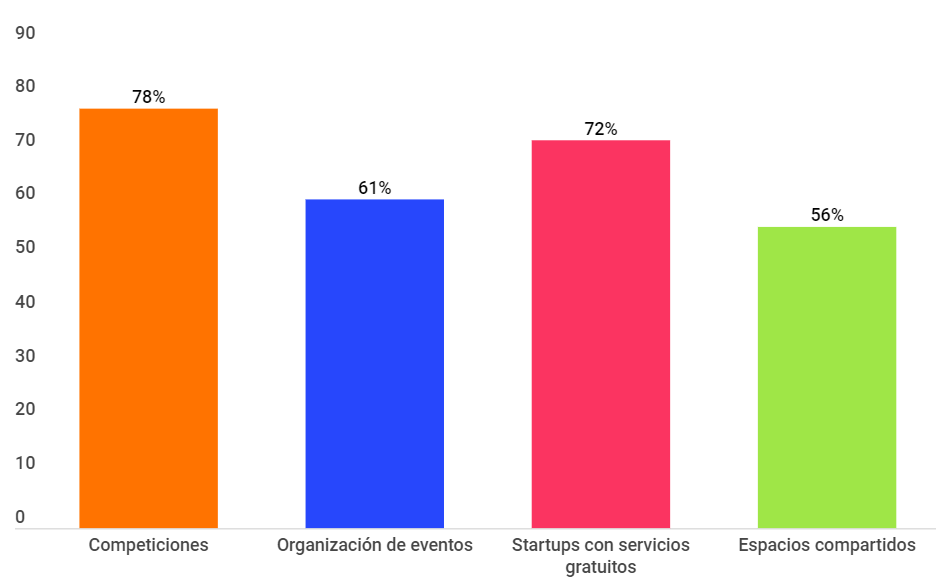
These are relatively “light” ways to experiment with the concept of open innovation, which allow companies to get an initial idea of the types of technologies and capabilities they offer, without making a long-term commitment.
Trend location, Where is innovation located?
Once companies have decided they want a more structured commitment to startups, many establish “advanced stalls” within the most active startups.
These often play the role of “trend ingesting”, scanning a wide range of interesting startups, looking for new commercial or strategic solutions.
Located in typical access points, such as Israel or Silicon Valley, these “advanced innovation positions” can take different forms, ranging from ‘antennas’ (a person or a team of people in a shared workspace) or CVC offices, to more structured presences such as innovation laboratories and R&D.
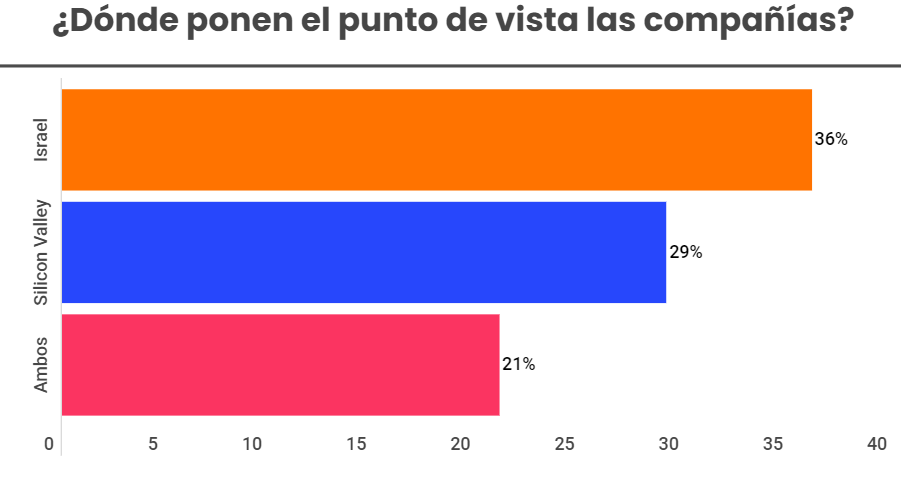
Although historically, Israel and Silicon Valley excel, they are not the only areas where large groups of innovative companies gather. For example, Sydney is the capital with the largest number of start-ups in Australia, which together account for about 35% of the national total. This ecosystem is characterized by three factors: the growing startup community, the regulations around investments and global connectivity.
Startups: corporate accelerators
Accelerators are a step further than ‘Advanced Innovators’. It generally provides substantial support to start-ups, as well as (in many cases) a deeper commitment to the company.
69% of the companies chose an accelerator in 2018 to improve their profits, for example, Europe has 40% of the accelerators in operation right now.
For this reason, some companies, such as KBC Group, Vodafone Group and Google have pursued an open innovation strategy through third parties. Although many accelerators are international in nature, and are interested in startups from outside the country, many of these startups are unwilling or unable to relocate.
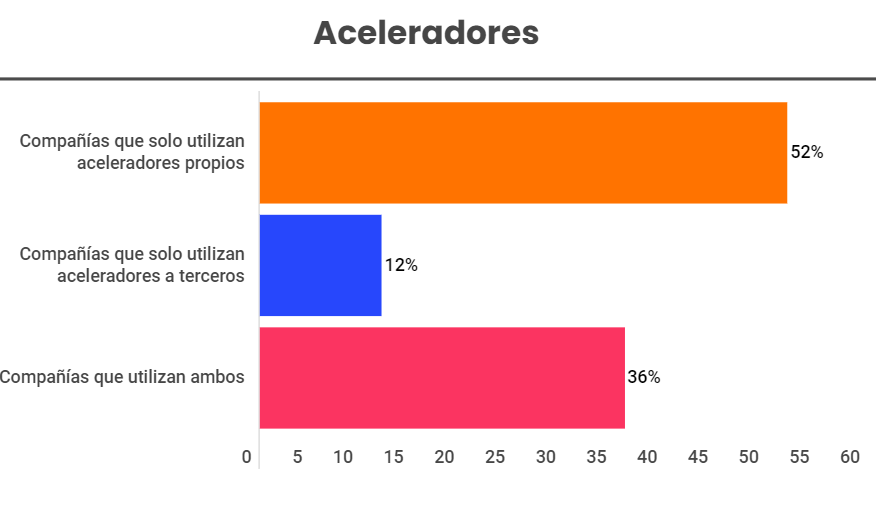
Which has led to third-party accelerators remain an attractive alternative to expanding range by allowing quick start or hedging bets. In 2018, the 48% of the startups used third-party partners, such as Techstars and Startupbootcamp (often in addition to their own programs), to engage with large companies.
Procter & Gamble, an American consumer goods multinational, a few years ago changed towards a more innovative business model, through which the company began collaborating with suppliers, competitors, scientists and entrepreneurs, among others.
Thanks to Networking and other investments in innovation, R&D productivity has increased by 60 years. And since 2017 P&G has launched more than 100 products thanks to the help of external players.
Co
For startups, a corporate client or development partner can provide crucial validation. For companies, outsourcing a startup is an important means of attracting new innovative ideas and technologies to the supply chain for the benefit of end users.
Nearly two-thirds (64%) of the companies undertook innovative startup acquisitions in 2018. However, these unions are not without problems, including difficulties in meeting the procurement qualification criteria, bureaucratic registration processes that are not designed for “non-standard” acquisition, and a slow payment that causes significant cash flow problems for small businesses.
Investments
So far there has been talk of acquiring startups to advance in the field of innovative technologies, but this requires capital investment.
Investment in new companies requires significant resources and expertise. However, the benefits can be compelling, as this investment often creates a competitive advantage through exclusive access to cutting-edge technologies and other innovations.
Most corporations (78%) invested in startups in 2018. Of these, 39% invested through Corporate Risk Capital Funds (CVCs), 36% were off-balance sheet investments (direct investments without a financial vehicle) and 32% used both methods.
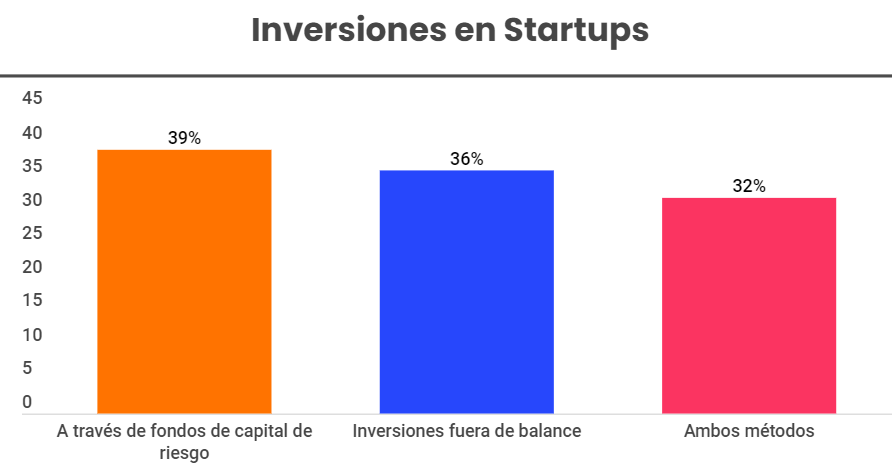
Investment sectors include biotechnology, energy, health, finance, communication and retail, with a slight preference for software services (SaaS) and hardware startups.
European companies continue to acquire significantly fewer startups than US companies. However, this is changing, as more European companies realize that acquiring young companies is an effective way to build next-generation products, expanding into new markets, or simply acquiring new capabilities (digital).
That said, US companies play a significant role in the European M&A scene as 27% of European companies’ acquisitions are being created by US corporations.
Most use an adaptable and flexible approach to bringing new businesses into their broader business. Depending on the reason for the acquisition, the startups will join an existing unit or remain as a separate unit.
Conclusions
Times have changed. The impact of globalization, the accelerated growth of the internet, the emergence of digitization and the reduction of technology costs have triggered an inevitable process of “democratization of innovation”. That has led to increased access to information, capital and the most innovative technologies.
The previous barriers have been reduced and as a result the scenario has become more competitive and a large number of start-ups have entered the market doing their best to grow.
In this context, open innovation has emerged as a profit-oriented proposal after the combination of different skills and players, which will allow to achieve the best results at a lower cost.
The concept of open innovation has achieved a strong position among companies interested in capturing good ideas and solutions, regardless of their provenance.
It should be noted that throughout the different stages of collaboration between organizations and startups, different levels of commitment are required, not only in terms of financial capital, but also with regard to sharing skills and experience.