
 Softtek


The customer experience is a huge way to drive business results through digital marketing. The 78% of consumers are more likely to be loyal to organizations that understand them and offer them what they are looking for.
As customer experience-oriented marketing experts look for new ways to resonate with their target audience, they collect data and analytics from a wide range of resources.
Does innovation help or hinder?
Delivering an incredible customer experience doesn’t have to be difficult, although the challenges faced by the most “modern” brands are real, and the stakes couldn’t be higher.
The good news is that technological advances offer brands more effective ways to manage everything from production, customer service to marketing. However, there is also not-so-good news, which is that, currently, companies are not making the most of the technology available.
Although brands use a large number of data sources to fully understand and serve their customers, many are not using the right tools to manage that data correctly.
This is worrying simply because you can’t improve long-term customer satisfaction without opting for new products and services as your industry evolves.
For starters, innovation is a differentiating element. It allows you to build on ideas to create your own niche or establish a path that others must follow. And above all, it helps to anticipate and meet the needs of the customer before they are aware of it.
If the goal is really to improve customer satisfaction, innovation should be part of the strategy. This means innovating in the way consumer information is unlocked, the type of information it considers valuable, and the tools it uses to compile data.
However, the customer’s journey and therefore his satisfaction do not cease to matter to the company once the sale has been processed, but that it is interesting for companies to accompany their customers to the end of the whole process and to stay on hold in case they need any information or help, since during all that time valuable data will continue to be generated.
What problems do the collected data present?
Consumer data in the digital world is plentiful, posing challenges for many brands. However, the reality is that a combination of data needs to be accurately analyzed in order to find valuable information to help drive new business initiatives.
The idea of a compartmentalized approach is obsolete, which does not mean that different channels such as social networks or direct sales channels are no longer used. Now what’s needed is an integrated approach, where marketing campaigns are unified, even though not all brands are working in that direction.
Feelings, the main differentiator
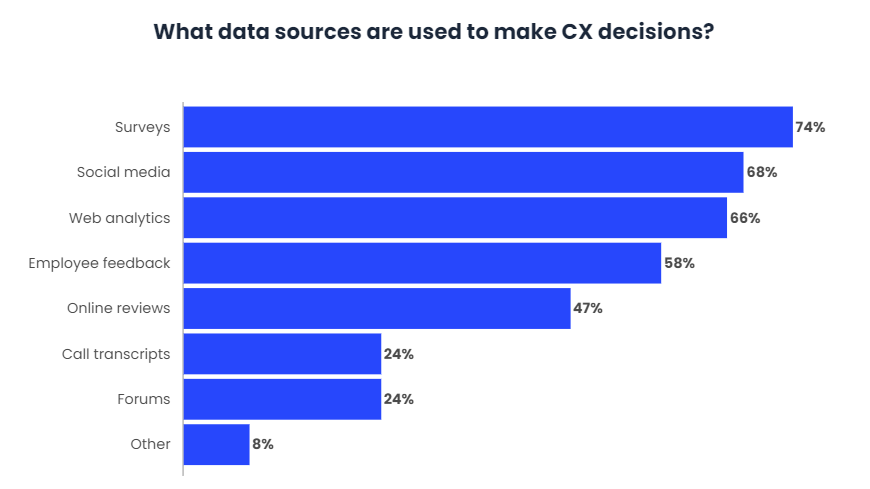
Surveys are companies’ preferred choice to obtain customer data, however, they can yield unreliable data. Social media data they are the next most common option, and unlike the previous option, this is very important information about the customer experience. Because it’s data that comes directly from consumers, in real time and in their own words.
This is real, unfiltered information. Which doesn’t mean it’s 100% reliable, as trolls, bots and spam don’t help discover what consumers are trying to say. However, social analysis tools retrieve information relevant to companies.
Sentiment analysis is an important part of this classification process, providing context around the data it finds, identifying the trend that consumers are talking about and when it is found, either in full boom or bust.
The strength of sentiment analysis is the amount of data that can be performed. Social data is obviously part of the mix, however, it is not the only ones, it can also include forum data, review sites and blogs, as well as a broader analysis of the customer experience from reviews, call center data or surveys .
On the other hand, it’s important take into account customer feelings when interacting directly with the resources intended for them, according to a recent Xaxis report titled, “Measuring Success: The Results Media Report”, 68% of consumers said they feel like a generic customer when interacting with online brands, and 63% says they will abandon a brand if the online experience is poor.
All data is important
As already mentioned, not collecting all the data is a mistake that many brands comment on, since working with as much information will be crucial to succeed in improving the customer experience. However, you first have to rate it on less popular datasets, and then extract the most valuable ones.
For example, why are forums so under-researched as an important source of consumer information? Just like data shared on social networks like Facebook, Instagram, etc., forums are places where the target audience shares unfiltered opinions about brands.
More than 80% consumers seek advice from family or friends before shopping online. That number rises to 92% when consumers are Millennials. So knowing what’s said in the forums is just another way to understand those peer-to-peer recommendations.
So far, there has been talk about data collected through online channels, however, it is essential that if a company wants to prosper, it will converge both the online data and those extracted from a physical channel at some point in its strategy Business.
In many aspects of the customer experience area, physical stores are superior to online channels. Similarly, e-commerce brands if they want to succeed should stand out in everything that differentiates them from offline stores, where consumers can view and touch goods, and ask questions that will be answered immediately by a real person and not a lagging chatbot.
So far, brands seem to know the importance of tracking opinion about their products and services through digital channels. However, when it comes to tracking specific locations, there is a gap.
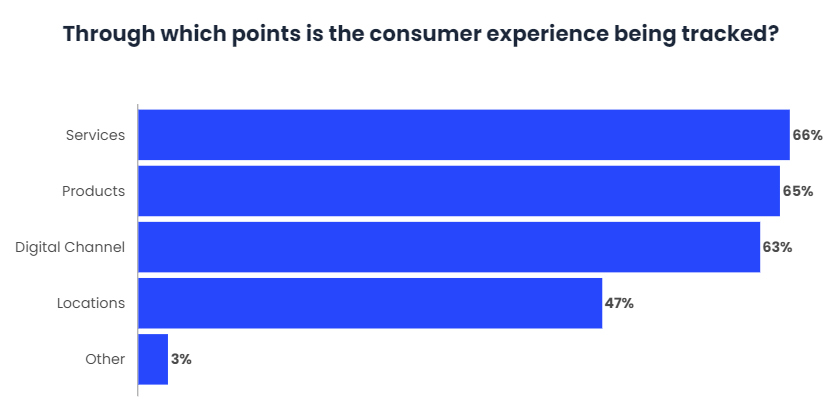
This is especially critical because bad offline experiences are shared online.
The role of competitive analysis
On the other hand, the poor performance of most brands when it comes to intelligently gathering competitive information is worrying. Some common errors are:
- Wrong assumptions about who your online audience is.
- Lack of recognition of trademarks and e-commerce markets as competition.
- To believe there is no competition.
- Focus on the brand perspective and not the consumer’s perspective.
- Use limited tools that don’t include sentiment analysis or are not combined online with offline data.
Complete tools that bring all the data together in one place are needed in real time so that industry trends and competitive opportunities can be evaluated.
This is an area where special attention should be paid to negative data, as “customers give twice the importance in negative experiences as in positive ones”.
An example of how to approach this situation was that experienced by the Hertz company, recognizing the importance of solving problems quickly when their customers are away from home. They increased customer service resources, social resources and content, focusing on connecting with travelers.
It worked so well that it changed the opinions completely changed. While its best competitor Avis inspires conversations about detail and logistics, Hertz is inspiring conversations about emotions and the travel experience. Exactly what they want people to think when they need a car for a trip.
Great results require great tools
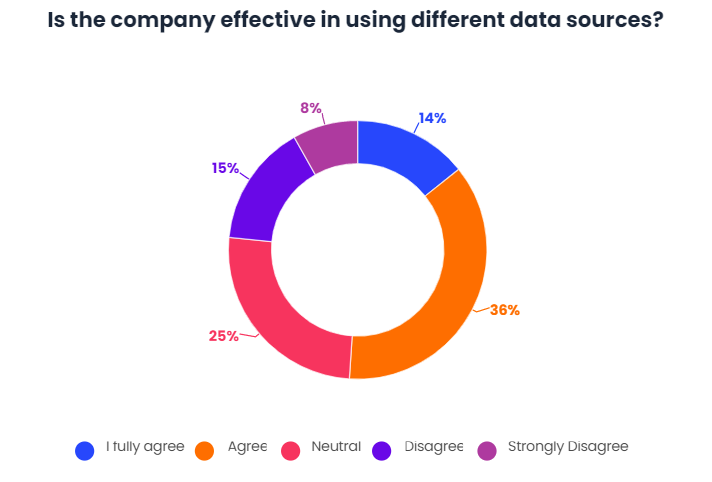
From Hertz’s example it is important to learn that giving customers what they need is intentional action and not something that happens naturally over the course of the customer’s journey. Most consumer experience managers agree or very agree that Customer Experience Analytics is an essential element.
However, with budgets tighter than ever before, return on investment is a challenge. Perhaps that’s why most companies continue to use multiple systems to gather ideas or data.
Less than 40% companies use true social listening tools, while the 1960s rely on cloud marketing tools like Adobe, Oracle, Salesforce, AgileOne, and Nielson.
These are excellent but very limited tools are not comprehensive enough to enhance the full scope of the strategic operations needed to compete in today’s market, where promoting the brand is just one part of the target.
In addition to the necessary tools, it is important that professionals focus their attention on the target audience, so far it has been commented that all the data is necessary to be able to obtain valuable information, however, it is important invest the final efforts in those sectors that are most relevant to the company.
SurveyMonkey conducted a survey to examine digital marketing messages and found that grabbing buyers’ attention and trust remains the biggest obstacle for 36% sellers. However, there are now common ways in which marketing professionals can overcome noise and stand out from customers.
For example, 48% of the customers say they find the comics most effective in terms of catching their attention.
Conclusions
Companies that actually gather all the information have a big advantage over those that don’t. Every channel, every point of contact, every piece of data that is not considered a gift to its competitors.
It has been seen that too many CX professionals are not leveraging (or prioritizing) call center data, forums, employee feedback, or online feedback. Nor is all parts of the customer’s journey given the same weight either.
Errors, which will mark a losing marketing strategy, cannot create a beneficial customer experience if the approach does not include the entire customer journey, since each brand with a customer journey-focused experience will be the winner.