
 Softtek


Not only leadership, culture and technology lead to business success from the start, but also speed, time and a sense of purpose. Today it’s easier than ever to launch prototypes and get feedback, thanks to a range of free online tools, social media, crowdsourcing and crowdfunding and yet 90 of startups fail.
Generally startups start their journey with a predefined vision and goal and to achieve them, pose strategies, which include product development, marketing plans, associations, organizational design, etc.
To ensure that a startup does not stay in a simple project and becomes a consolidated company, many of them, they choose to adopt the Lean Startup method that allows, focusing on the needs of the client and counting on their feedback, reach the final version of the product.
It is a fashion concept in the entrepreneurial world, where the guidelines and resources to develop a project are very different from how they are done in a large company. It is estimated that by 2021, 50% startups will leverage Lean Startup’s business-level techniques to increase the pace and success of business transformation.
Lean Startup
Companies that decide to adopt this implementation framework do not rely on a vision, and subsequently discover the way to get there. If not they look at what resources they already have available—people, experience, skills, and find a strategy they can adopt right away. Within the Lean Startup model, three techniques are mainly distinguished: Customer Development, Canvas and Agile or SCRUM.
- Customer Development:
It consists in consulting customers who have an opinion on the product, absorbing their opinions and implementing them in the creation process in order to generate the best product adapted to the needs of consumers.
- Canvas:
This technique consists of visualizing and designing a dynamic and visual business model, embodied in a canvas called Canvas, which is divided into grids, each of them is dedicated to a fundamental aspect of the business model: value proposition, revenue, expenses, procurement channels… In these grids, ideas are continually added and removed until they have a final version.
- Agile or SCRUM:
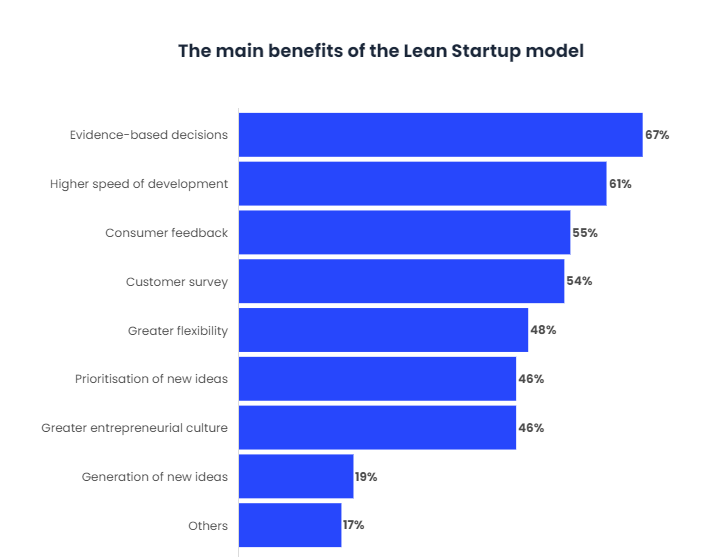
It is a set of dynamic and rapid communication and product development techniques used to propose ideas and improvements and configure the final project in a team. Regardless of the technique used, the main benefits of using a Lean Startup approach can be summarized in:
- Decisions based on evidence and data, rather than executive instincts.
- A faster cycle time to develop ideas.
- Better quality feedback from customers and stakeholders, often because you’re asking them to buy something instead of just expressing feedback in a focus group.
- More flexibility to make changes to ideas as they move from concept to “minimum viable product” to finished product.
THE EVERLANE CASE
Everlane, the online clothing retailer has been a successful example that applies lean startupthinking. In 2010, Michael Preysman founded the company and just a year later, Everlane had received $1.1 million in funds. This gain began with a list of referral invitations that earned 60,000 subscribers in 5 days, although the company only had 1,500 T-shirts in the inventory.
The process is as simple as the build-measure-learning feedback circuit. Everlane based on reviews on purchased products or similar items, identifies the most popular ones and then adds other features or designs to the most successful items. Through this iterative process, the company optimizes the products and finally launches a perfect new product.
Their marketing strategies also embrace Lean Startupthinking. To further reduce the cost, they don’t open physical stores, they don’t invest much in advertising, they only have one or two people to manage their social media platform.
Fail Fast or Win Big
On the other hand, a new methodology has emerged that extends the Lean Startup concept. This new model proposes that entrepreneurs should take a ‘maniacally curious’ attitude around their problems solutions and customers and, in addition, actively participate in trend monitoring and brainstorming.
The new Lean model consists of four components, business models, lean resources, rapid prototyping, and customer truth.
BUSINESS MODEL
A good business plan covers topics such as market analysis, product creation, sales strategy, organizational team and financial projections. They help chart milestones, capture budget problems, map competition, and give employees and investors a general idea.
However, for a product that has not yet developed in a rapidly evolving market, a business plan can be largely hypothetical and could change dramatically as the ecosystem evolves, taking valuable time away from more activities such as real prototype testing.
Therefore, a useful tool for founders is the Canvas business model. It is defined as a ‘design for the successful operation of a business’, identifying products, revenue streams, customer base and financing details. The new product or service must offer unique and demonstrative benefits and represent incremental, evolutionary or revolutionary innovation.
While the mobile phone was a truly revolutionary innovation, for example, many of today’s market leaders were not the pioneers in their domains. Google was not the first search engine; Facebook wasn’t the first social media company or Apple wasn’t the first with a portable music player or smartphone. However, these companies delivered much better customer value than their competitors and predecessors.
LEAN RESOURCES
On the other hand, restrictions can end with creativity at first. That’s why using online tools can help you find independent talent, create a SaaS- and infrastructure-based workflow, and even find funders.
In addition to the main common social networks, Square, Google Trends and HootSuite can be useful tools. Some founders even create a temporary product or company to fund the next big real company.
For physical products, the key decisions to be made are the choice of local or foreign supplier, trade shows, retail chain and distributor or national brand partner. For online distribution, however, founders can start with their own website or on a larger e-tailer or marketplace site.
A variety of crowdfunding sites are currently emerging with three types of options for founders:
- Reward (Kickstarter, Indiegogo, RocketHub, PeerBackers)
- Debt (Funding Circle, Lending Club, Zidisha, Index Ventures)
- Capital (AngelList, CircleUp, OurCrowd, MicroVentures).
Finally, another financing practice that directly involves the consumer is crowdfunding which also helps with public relations, risk management, customer acquisition and opportunities to exchange ideas with the crowd.
QUICK PROTOTIPED
Quantity, as well as the quality of ideas and experiments are the main elements that make a startup get going. The good choice of the first customer segment also helps; sometimes a good product is shown to what can become a secondary audience rather than the primary group. 3D printing, sites like Etsy and Craig’s List, and local trade shows are a good way to test early product prototypes and learn from bugs on the market.
THE CUSTOMER’S TRUTH
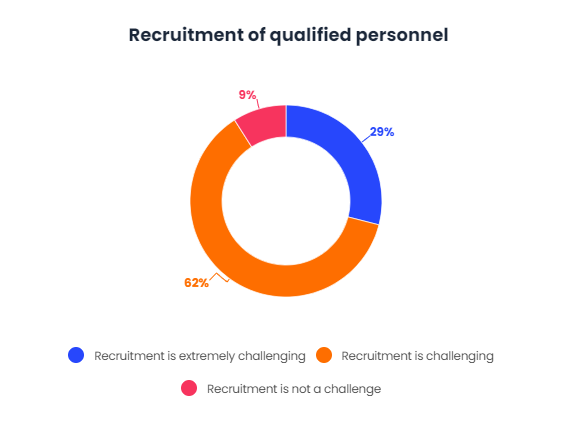
Ultimately, entrepreneurs should not stop worrying about the customer at any time, however, they should know where the line of complacency lies. Surrounding yourself with professionals who take care of consumer experience and market trends is another key point for success. However, finding workers with the skills needed to grow a startup is an obstacle, 29% of new companies see hiring skilled staff as a challenge.
The mission is to build a great brand that simply cannot be replaced. The brand’s “real moments” occur when customers meet their brand, see it, buy it, use it, and then share their experiences with others.
The greatest example of this practice was carried out by the creators of Instagram, which developed for the first time an application with a wide range of features that, however, stands out for the only feature that all users like, photos.
Conclusions
In short, both the Lean Startup model and the Fail Fast model encompass the entrepreneurial spirit of teamwork, with a combination of emerging trends and customer knowledge. Without neglecting, new technological trends such as the Internet of Things, Big Data, remote monitoring (especially for security), mobility or the shared economy, among many other things. Both business models share the vision of keeping the customer at the center of their business strategies in order to achieve total success, for this, it is important to hire qualified personnel.